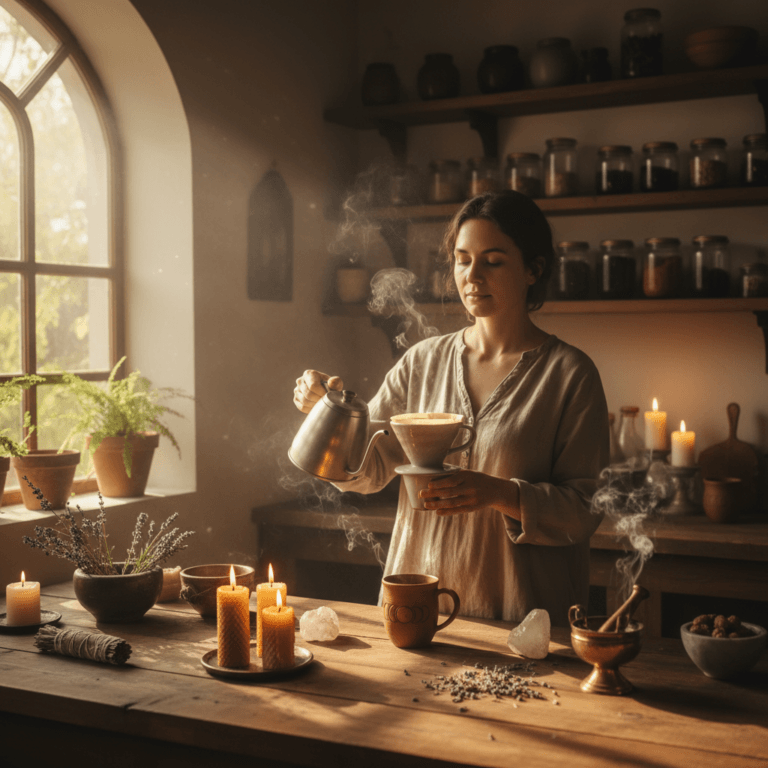

Exploring Brewing Rituals and Intentions: A Guide to Meaningful Ceremonies
Estimated Reading Time: 20 minutes
Key Takeaways
- Brewing rituals transform beer-making into sacred, intentional practice.
- Intentions infuse your brew with personalized spiritual meaning and purpose.
- Historical and cultural traditions show brewing’s role as a connector between humans, spirits, and nature.
- Mindful brewing invites presence, sensory awareness, and emotional connection during the process.
- Documenting and reflecting on your brews deepens your spiritual homebrewing journey.
Table of Contents
- Introduction
- Understanding Brewing Rituals
- The Importance of Intention in Brewing
- Sacred Brewing Practices
- Mindful Brewing: A Spiritual Approach
- Ceremonial Brewing Explained
- Crafting Your Personal Brewing Ritual Guide
- Brewing Intentions and Their Role in Spiritual Homebrewing
- Conclusion & Call to Action
- FAQ
Introduction
Brewing rituals are intentional, repeated practices performed throughout the brewing process that transform ordinary beer-making into something sacred and meaningful. Rather than simply following a recipe, these rituals mark every step—from cleaning equipment to sharing the final drink—as part of a spiritual practice.
Intentions are the conscious purpose, prayer, or focus you infuse into your brewing. Whether you’re brewing for healing, protection, community bonding, or gratitude, your intention shapes the entire experience and gives your brew deeper meaning.
Throughout history, brewing events have served as ceremonial gatherings where friends and communities come together with shared focus. Ancient cultures poured libations, held festival drinking rites, and made offerings that connected people to the divine and to each other. These practices weren’t just about making alcohol—they were about creating sacred bonds.
Today’s brewing ceremonies carry forward these ancient traditions. When you brew with intention, you create:
- Deepened spiritual connection to yourself, others, ancestors, deities, and nature
- Stronger community bonds through shared ritual and shared drink
- More mindful, present brewing experiences
- A tangible way to embody your spiritual path at home
Whether you follow a specific spiritual tradition or simply want to make your brewing more meaningful, incorporating rituals and intentions can transform your brew days into powerful ceremonies.
See more at Impossibrew, Wikipedia, and Yale HRAF.
Understanding Brewing Rituals
What Constitutes Brewing Rituals
Brewing rituals can take many forms, from simple gestures to elaborate ceremonies. Common ritual practices include:
Opening and Closing Practices:
- Beginning the brew day with a prayer, chant, or moment of silence
- Closing with gratitude and acknowledgment of the work completed
- Lighting candles or incense to mark sacred time
Offerings and Libations:
- Pouring a small amount of wort or finished beer to ancestors, land spirits, or deities before tasting
- Setting aside the first pour as a gift to the sacred
- Offering grain or hops back to the earth
Symbolic Actions:
- Stirring in a specific direction while holding your intention
- Speaking particular words or prayers when pitching yeast
- Using special vessels, spoons, or tools reserved only for ritual brews
- Marking fermenters with symbols that represent your intention
These sacred brewing practices transform technical steps into meaningful moments. Each action becomes a prayer, each ingredient a gift.
Historical Significance
Ancient civilizations understood brewing as a sacred art. Libations—ritual pourings of beer, wine, and mead—were central to religious life across Greece, Rome, Mesopotamia, and East Asia. People offered these drinks to gods and the dead, believing that the liquid carried their prayers and honored spiritual beings.
Sacred drinks played crucial roles in spiritual ceremonies:
- Kykeon in ancient Greece was a ritual brew consumed during the Eleusinian Mysteries, helping initiates achieve altered states and visionary experiences.
- Soma in Vedic India was a divine beverage prepared with ritual precision, believed to connect humans to the gods.
- Balché among the Maya carried ancestral and protective power—a fermented tree bark and honey drink essential to ceremonies connecting the living with ancestors and spirits.
These weren’t casual beverages. They were carefully brewed with intention, blessed with prayers, and consumed as acts of worship.
Learn more at Impossibrew, Wikipedia, and Yale HRAF.
Cultural Perspectives on Brewing
Different traditions approach sacred brewing in unique ways:
Mediterranean and Near East:
Centered brewing around civic-religious feasts and festival drinking. Libations honored household gods, city protectors, and the dead. Every public gathering included ritual pourings that blessed the community.
Maya and Vodou Traditions:
Alcohol serves as a medium for spirit communication. Ritual drinks facilitate possession by deities and ancestors, acting as a bridge between worlds.
Buddhist and Tibetan Contexts:
Chang, a traditional beer, functions as both a ritual tool and symbolic substance in tantric practices. While Buddhism generally discourages intoxication, chang appears in specific offerings and ceremonies.
Monastic Christianity:
Medieval monks treated brewing as labor prayerfully offered to God. Beer integrated into hospitality, fasting, and community life, with the process itself being a form of prayer and service.
Each cultural perspective shows that brewing rituals are universal human expressions of the sacred.
Further reading: Impossibrew, Wikipedia, Yale HRAF, Missouri State Thesis, Adoremus, UIowa Research.
The Importance of Intention in Brewing
Definition of Intention Setting in Brewing
Intention setting in brewing means deliberately choosing what energy, quality, or outcome you want your brew to carry. You’re not just making beer—you’re creating something infused with purpose.
Your brewing intentions might focus on:
- Courage or strength for facing challenges
- Comfort and healing during difficult times
- Protection for your home and family
- Celebration of life transitions
- Gratitude for abundance
- Love and connection with others
When you set an intention, you declare what this particular brew means and what you hope it will bring into your life or community.
Spiritual Significance
Many spiritual traditions treat alcoholic drinks as carriers of prayer and blessing. The words spoken over the liquid, the focus held while brewing, and the manner of offering all matter deeply.
In Maya and Vodou ceremonies, ritual speech accompanies every step of preparing sacred drinks. Prayers, invocations, and blessings shape the spiritual power of the beverage. The drink becomes a vessel for divine energy.
Ancient cultures poured libations with specific intentions—seeking favor, giving thanks, honoring the dead, or asking for protection. The physical act of pouring was inseparable from the prayer it carried.
Modern practitioners describe brewing as ritual alchemy. Like medieval alchemists who believed intention and spiritual purity affected their work, today’s ceremonial brewers understand that will and focus shape the “magic” of the final drink. Your consciousness becomes an ingredient as real as grain and hops.
Discover more at Yale HRAF, Impossibrew, Wikipedia, Church of Satan, and Good Beer Hunting.
Influence of Intentions on Brewing Process
Your intentions don’t just add meaning—they actively shape how you brew.
Recipe Choices:
When you brew with intention, you select ingredients that align with your purpose. Chamomile for calming, rose hips for love, protective herbs like mugwort, celebratory spices like cinnamon. Your intention guides these choices.
Attitude and Presence:
Intention setting cultivates patience, care, and gratitude during every step. Instead of rushing, you remain present. You tend the brew like a gardener tending plants.
Collective Energy:
When a group brews together with shared intention, an ordinary brew day becomes a collective spell or prayer. The final product holds all that combined intention.
Your brewing intentions create a feedback loop—your purpose shapes your actions, and your mindful actions deepen your connection to that purpose.
Sacred Brewing Practices
Highlight Various Sacred Brewing Practices
Sacred brewing encompasses many specific practices that honor the spiritual dimension of fermentation:
Offerings and Libations:
Pour the first portion of your brew to deities, spirits, or ancestors before anyone drinks. Pour wort onto the ground or onto an altar to acknowledge the brew as a gift from nature and spirit.
Ritual Speech:
Recite prayers, mantras, songs, or spells while stirring, boiling, or bottling. Chant or speak intentions aloud. The vibration of voice is believed to infuse the liquid.
Ancestral Recipes:
Use traditional or family brewing methods to keep lineage alive. Brewing balché or monastic beer connects you with generations before you; the recipe itself becomes ancestral worship.
Consecrated Spaces and Tools:
Create a brewing altar with symbols, candles, and sacred objects. Use blessed vessels or tools reserved for spiritual brews; these carry accumulated blessing from ritual use.
References: Yale HRAF, Impossibrew, Wikipedia, Church of Satan, Adoremus, UIowa Research.
Connection to the Sacred
These ceremonial brewing practices nurture connection to the sacred in several ways:
Co-Creation with Nature:
Brewing is collaboration with living organisms and natural forces. Yeast transforms sugars, time works its magic, and natural ingredients contribute their essence. Rituals honor these non-human partners in the process.
Inviting Spiritual Presence:
Offerings and invocations invite ancestors, land spirits, or deities into your brewing space, surrounding you with spiritual guidance and blessing.
Symbolic Transformation:
Ingredients become symbolic carriers of life, joy, purification, or fertility—grain as abundance, water as blessing, hops as protection, yeast as transformation.
Approaching brewing as ceremony means participating in ancient creation patterns connecting you to the entire web of spiritual practice.
Explore more: Church of Satan, Adoremus, Brewed Bliss, Yale HRAF, Impossibrew, Wikipedia.
Mindful Brewing: A Spiritual Approach
Definition of Mindful Brewing Intention
Mindful brewing intention means treating the entire brewing process as moving meditation. You stay aware of your body, breath, sensory details, and the intention you’ve set from start to finish.
Instead of brewing on autopilot while your mind wanders, you bring full attention to each moment. You notice the texture of grain in your fingers, the sweetness rising from the mash, the rhythm of the boil, the warmth of the kettle, and the coolness of your hands.
This combines traditional mindfulness with physical brewing actions, creating an embodied spiritual practice.
Key Elements of Mindfulness
- Arrival and Grounding: Take moments to arrive fully, breathe deeply, and state your intention.
- Single-Pointed Focus: Engage fully with each step, without distraction.
- Sensory Awareness: Notice colors, smells, sounds, textures, and tastes—anchoring you in the present.
- Emotional Presence: Observe emotions without judgment and integrate them into your intention.
Enhancing Ceremony Through Mindfulness
- Reduced Distraction: Your brewing space becomes a sanctuary free from external stress.
- Heightened Ritual Presence: Symbolic actions become profound when executed with full awareness.
- Deepened Connection: Strengthens connection to self and community through shared focused experience.
- Embodied Ritual: The final brew carries the weight of attention and care, making drinking a rite.
Sources: Impossibrew, Brewed Bliss.
Ceremonial Brewing Explained
Define Ceremonial Brewing
Ceremonial brewing is a structured session designed as a formal ceremony with clear beginning, middle, and end. It includes symbolic actions and follows a shared spiritual or magical goal beyond producing beer.
Every element serves practical and spiritual purposes, making the entire brew sacred.
Characteristics Compared to Regular Brewing
- Stated Purpose: Clear spiritual or magical goal guides all decisions.
- Ritual Elements: Use of altars, candles, offerings, chanting, divination, and timed blessings.
- Timing: Aligning brews with solstices, equinoxes, moon phases, or holy days.
- Formal Structure: Planned order for speech, silence, and actions.
- Shared Focus: Collective intention for group brewers; ritual rather than social gathering.
Sample Step-by-Step Brewing Ceremony Outline
- Preparation of Space (30 minutes before brewing): Cleanse brewing area with smoke, sound, or prayer; set up altar with symbols and candles.
- Opening the Circle (10 minutes): Gather, welcome, call in ancestors or deities, light candles while stating brew intention.
- Intention Setting (15 minutes): Each participant states brewing intention; write or speak intentions near fermenter.
- Mashing with Focus (60-90 minutes): Add grain while chanting/mantra; stir in specified direction; maintain silence or gentle chant.
- Boil and Blessing (60-90 minutes): Offer libation; add hops and herbs at times linked to intention.
- Yeast as Spirit (15 minutes): Hold yeast, breathe, visualize intention infusing it; speak a blessing inviting the spirit of fermentation.
- Closing (15 minutes): Express gratitude, offer final prayers, seal fermenter, mark with symbols.
- Sharing and Reflection: Celebrate final brew with acknowledgment, silent tasting, and shared reflections.
This structure can be adapted to your tradition or practice.
Crafting Your Personal Brewing Ritual Guide
Practical Advice on Creating a Brewing Ritual Guide
- Identify Your Path: Witchcraft, animism, Christian contemplation, ancestor veneration, or other. Choose authentic symbols and prayers.
- Choose Your Focus: Ritualize key phases like pitching yeast or pouring libations; elaborate or simple as feels right.
- Start Simple: Begin with a candle and opening prayer; add complexity over time.
- Document Your Process: Record resonant prayers, timing, and meaningful actions; evolve your practice through notes.
Key Elements to Consider
- Environment: Solitude or community; indoors or outdoors; include altars, candles, music, seasonal decorations.
- Materials: Choose ingredients that align spiritually — barley, wheat, chamomile, lavender, rose hips, yarrow, juniper.
- Intention: Frame positively and specifically; write down; link to seasons or people.
Sample Brewing Ritual Template
Before Brewing:
- Clean space and tools with intention (purification, not just sanitation)
- Light candle and say: “I brew for [your specific intention]. May this work be blessed.”
- Take three deep breaths to center yourself
During Mashing/Boiling:
- As you stir, silently repeat your intention or mantra
- Offer a small libation of wort outside or on altar, saying “For the ancestors and spirits who guide this work”
- Maintain awareness of breathing and bodily sensations
Pitching Yeast:
- Hold yeast, breathe slowly
- Visualize intention as energy flowing into the yeast
- Say: “Spirit of transformation, carry this intention through your work”
Fermentation:
- Place fermenter where visible
- Mark with symbol or written intention
- Check mindfully, speak or hold intention during visits
First Pour and Sharing:
- Open with acknowledgment: “This brew was made for [intention]”
- Take first sip in silence
- Invite sharing of reflections and sensations
This template takes about 15 extra minutes but adds immense depth.
Brewing Intentions and Their Role in Spiritual Homebrewing
Significance of Brewing Intentions in Homebrewing
Homebrewing offers unique spiritual work opportunities unavailable in commercial settings.
- Complete Control: Every ingredient, timing, and ritual is yours to customize.
- Personal Spiritual Work: Mark chapters such as grief, new beginnings, protection, celebration, healing, or ancestor honor.
- Intimate Scale: Small batches allow focused, meaningful creations for specific purposes.
- Flexibility: Experiment with timing, ingredients, and methods aligned with spiritual rather than commercial goals.
Documentation and Reflection Post-Ceremony
- Brewing Grimoire or Journal: Record dates, recipes, intentions, ritual steps, feelings, and unusual occurrences.
- Fermentation Observations: Note unusual fermentations that may signal spiritual activity.
- Tasting Notes: Record flavor, aroma, emotional or spiritual experiences, and whether intention manifested.
- Reflection After Completion: Assess how intention unfolded, what was powerful, potential adjustments, and lessons learned.
This practice deepens and refines your spiritual brewing journey.
Conclusion & Call to Action
Brewing rituals and intentions transform a technical process into a living spiritual practice. Brewing with awareness deepens connection to ancestors, community, and sacred forces in everyday life.
The paths shared—from Maya balché to monastic and modern magical traditions—offer many ways to bring meaning to your brews.
Ceremonial brewing is accessible: you need intention, ingredients, and willingness. Start with small acts—a candle, a prayer, a libation—and watch your experience deepen.
Over time, create full ceremonies, altars, consecrated tools, or brewing circles. Each intentional brew becomes a carrier of blessing and a tangible link to sacred transformation.
The yeast transforms sugar to alcohol. Your intention transforms brewing into ceremony. Your awareness transforms ingredients into sacred offerings.
We Want to Hear From You:
How do you incorporate brewing rituals and intentions? Do you use unique herbs, prayers, or ceremonies? Share your insights in the comments and inspire others on their spiritual homebrewing journey.
Continue Your Journey:
Subscribe for more content on mindful brewing, spiritual homebrewing strategies, and sacred brewing history. Join a community transforming beer brewing into prayer, magic, and sacred connection.
Your next brew day awaits. What will you create with full intention?
Further reading: Yale HRAF, Impossibrew, Adoremus, Brewed Bliss.
FAQ
What is the difference between brewing rituals and regular brewing?
Brewing rituals incorporate spiritual practices, intention setting, and symbolic actions that elevate brewing beyond mere recipe execution. Regular brewing focuses solely on technical processes without added spiritual context.
How can I start incorporating intention into my brew days?
Begin simply: choose a meaningful intention, say a prayer or mantra before starting, and infuse your focus into each step. Light a candle or offer a libation to avoid feeling rushed and more present.
Are brewing rituals tied to specific religions or cultures?
No. While many cultural and religious traditions have sacred brewing ceremonies, you can create personalized rituals that fit your spiritual beliefs, or practice secular mindful brewing infused with your own meaning.
What are some common ingredients used for spiritual intention in brewing?
Herbs like chamomile (calming), rose hips (love), mugwort (protection), lavender (purification), yarrow (protection), cinnamon (celebration), and juniper (cleansing) are often chosen to align with intentions.
Does mindful brewing affect the taste of the beer?
While mindful brewing may not change chemical flavor compounds directly, the focused care, deliberate ingredient choices, and timing often contribute to better brewing outcomes and a deeply personal tasting experience.
How do I document my brewing rituals effectively?
Keep a dedicated journal or grimoire noting date, intention, recipe, ritual steps, observations during fermentation, and tasting notes. Reflect on emotional or spiritual insights to deepen your practice.