
Mindful Sustainable Brewing Practices: A Guide to Eco-Friendly and Intentional Beer Making
Estimated Reading Time: 20 minutes
Key Takeaways
- Embrace mindful sustainable brewing practices to honor both the planet and the brewing process.
- Incorporate eco-friendly techniques including water conservation, energy efficiency, and waste reduction.
- Practice meditative homebrewing techniques to deepen your connection with the craft.
- Source local and organic ingredients intentionally for freshness and community support.
- Adopt conscious brewing rituals to elevate the brewing experience beyond a simple task.
- Participate in the slow brewing movement to enhance quality, sustainability, and mindfulness.
- Consume craft beer intentionally, supporting sustainable breweries and mindful drinking habits.
Table of Contents
- The Philosophy of Mindful Brewing
- Sustainable Brewing Practices
- Meditative Homebrewing Techniques
- Intentional Brewing with Local Ingredients
- DIY Sustainable Beer Making
- Conscious Brewing Rituals
- Meditative Ingredient Sourcing
- The Slow Brewing Movement
- Intentional Craft Beer Consumption
- Conclusion
- Share Your Mindful Brewing Journey
The Philosophy of Mindful Brewing
Mindfulness in eco-brewing means being fully present and aware during each stage of the brewing process. From the moment you select your ingredients to the final fermentation, mindfulness invites you to engage completely with what you’re doing.
This isn’t about rushing through steps or multitasking while your mash heats. It’s about:
- Noticing the aroma of fresh hops between your fingers
- Feeling the weight of malted barley as you measure it
- Listening to the gentle bubble of fermentation
- Observing the color changes during the boil
When you practice intentional brewing with local ingredients, you create a deeper connection to your craft. Each brewing session becomes an opportunity to slow down and appreciate the transformation of simple ingredients into complex beer.
Mindful brewing enhances the entire experience. You’ll find yourself more creative as you tune into subtle flavor possibilities.
You’ll develop greater appreciation for the ingredients, understanding their unique characteristics.
You’ll feel more connected to the brewing community and the farmers who grow your ingredients.
“Brewing isn’t just about efficiency or perfection. It’s about connection—to ingredients, to process, and to community.”
The mindful brewer understands that presence enhances quality. When you’re fully engaged, you notice subtle details that improve your beer. You catch problems early. You make better decisions about timing and temperature. You create beer that reflects your full attention and care.
Sustainable Brewing Practices
Sustainable brewing means minimizing resource use, reducing waste, and lowering your carbon footprint. These practices protect the environment while often improving your beer quality and reducing costs.
Let’s break down the key areas where you can make your brewing more sustainable:
Water Conservation
Water is brewing’s most essential ingredient. Most beers are over 90% water, and cleaning uses even more. Smart brewers conserve water through:
- Reusing rinse water for cleaning floors or watering gardens
- Investing in efficient cleaning equipment that uses less water
- Capturing cooling water for other household uses
- Using no-rinse sanitizers when appropriate
- Measuring water carefully to avoid excess
Energy Efficiency
Brewing requires significant energy for heating and cooling. Reduce your energy footprint by:
- Using renewable energy sources when available
- Optimizing brewing schedules to maximize equipment efficiency
- Insulating kettles and fermentation vessels
- Choosing energy-efficient heating elements
- Brewing during cooler months to reduce cooling needs
- Air-drying equipment instead of using powered dryers
Waste Reduction
Every brew day generates waste, but sustainable brewers minimize it through:
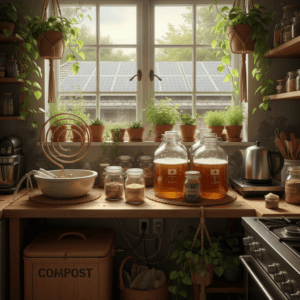
- Composting spent grains for gardens or offering them to local farmers
- Recycling all packaging materials, especially glass and cardboard
- Reusing bottles and containers multiple times
- Donating spent grains to livestock farmers as feed
- Using reusable cloth filters instead of disposable paper
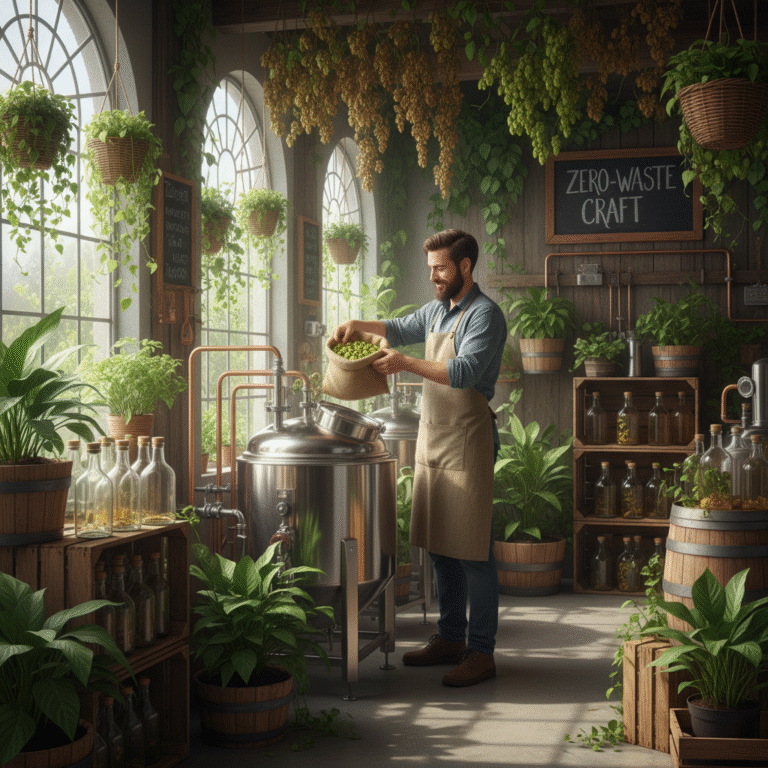
Zero-waste meditation brewing takes these practices further by aligning waste-minimizing techniques with a meditative mindset. This approach views waste prevention as both an environmental practice and a spiritual one. Each decision to reduce waste becomes an intentional act of respect for resources.
When you practice zero-waste meditation brewing, you pause before discarding anything. You ask: “Can this be reused? Can it nourish soil or animals? Is there a creative alternative?” This mindful questioning transforms waste management from a chore into a contemplative practice.
Small changes create significant impacts. If every homebrewer composted spent grains and reused bottles, millions of pounds of waste would be diverted from landfills annually. Your individual choices matter and inspire others in the brewing community.
Meditative Homebrewing Techniques
Meditative homebrewing techniques transform brewing from a task into a practice that nourishes your mind and spirit. These approaches foster a deeper connection with your craft while reducing stress and enhancing beer quality.
Breathing Exercises Before Brewing
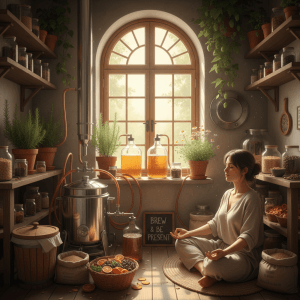
- Sit comfortably near your brewing space
- Close your eyes and take deep, slow breaths
- Count to four on the inhale, hold for four, exhale for four
- Notice any tension in your body and consciously release it
- Set an intention for your brew day: patience, creativity, or gratitude
This simple practice shifts you from the busy mind of daily life into the focused, present state ideal for brewing. You’ll make better decisions and enjoy the process more fully.
Creating a Peaceful Brewing Environment
Consider these elements for mindful brewing sustainability:
- Play calm, instrumental music that helps you focus
- Organize equipment so everything has a clear place
- Clean and prepare your space before starting
- Ensure good lighting to see your work clearly
- Remove distractions like phones or screens when possible
- Add plants or natural elements to your brewing area
A peaceful environment supports mindful attention. When your space feels good, you’ll look forward to brewing and stay more present throughout the process.
Incorporating Personal Reflection During Each Step
Make each brewing stage an opportunity for mindfulness:
During mashing: Notice the sweet grain aroma. Feel the warmth of the mash. Observe how water transforms grain into liquid potential.
During boiling: Watch the rolling boil. Notice how hop additions change the aroma. Appreciate the ancient alchemy occurring in your kettle.
During cooling: Use this waiting time for reflection. Consider what you’re grateful for. Think about who might enjoy this beer.
During fermentation: Visit your fermenting beer daily. Observe the changes. Listen to the airlock. Note your patience as transformation happens in its own time.
These practices reduce stress by anchoring you in the present moment. Brewing becomes meditation in action. You’ll often find that beer brewed with this attention tastes more balanced and refined—your focus translates directly into quality.
Meditative homebrewing techniques also create space for creativity. When you’re relaxed and present, innovative ideas flow naturally. You might discover unique ingredient combinations or perfect your technique in subtle ways.
Intentional Brewing with Local Ingredients
Intentional brewing with local ingredients strengthens sustainability while supporting your community and creating distinctive beers. Local sourcing reduces transportation emissions, keeps money in your region, and connects you to the people who grow your ingredients.
Benefits of Sourcing Local Ingredients
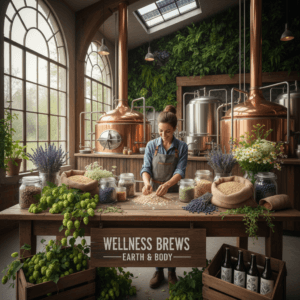
When you choose locally grown hops, barley, and other ingredients, you create multiple positive impacts:
- Reduced carbon footprint: Ingredients travel shorter distances, burning less fuel
- Fresher quality: Local ingredients are often fresher, improving flavor
- Community support: Your money helps local farmers and businesses thrive
- Unique character: Local ingredients create beer that reflects your region
- Transparency: You can visit farms and see growing practices firsthand
- Relationship building: Direct connections with suppliers deepen your brewing knowledge
Local ingredient sourcing embodies contemplative craft beer innovation. You’re innovating not through exotic ingredients from distant places, but through deep engagement with what grows near you.
The Significance of Seasonality
Brewing seasonally means choosing ingredients at their peak availability. This practice offers several advantages:
Spring: Fresh herbs and early hops create bright, aromatic beers
Summer: Peak hop harvest brings the freshest, most flavorful hops
Fall: Harvest grains and pumpkins inspire rich, warming beers
Winter: Root vegetables and stored grains make hearty, contemplative brews
Seasonal brewing connects you to natural cycles. You develop patience, waiting for ingredients rather than demanding everything year-round. This waiting enhances appreciation when those ingredients finally arrive.
Seasonal ingredients also influence beer flavor in exciting ways. Summer hops might emphasize different aromatic compounds than those stored through winter. Fresh autumn grains bring distinct characteristics compared to spring stocks. These variations make each brewing season unique.
Tips for Finding Local Suppliers
- Visit farmers markets: Talk to grain and hop growers who sell directly
- Contact local maltsters: Many regions now have small-scale malt houses
- Join homebrew clubs: Members often share information about local sources
- Search online directories: Organizations like the Brewers Association list local suppliers
- Visit local breweries: Ask where they source ingredients
- Attend agricultural events: County fairs and harvest festivals connect you with farmers
- Use social media: Local farming groups often sell directly to consumers
When you find potential suppliers, visit their farms if possible. See how they grow ingredients. Ask about their practices. Share your brewing goals. These conversations build mutual understanding and often lead to better ingredient selection.
Many farmers appreciate working with brewers who value quality and sustainability. You might arrange to purchase seconds or off-grade ingredients at reduced prices. You could offer spent grain in exchange for fresh ingredients. Creative arrangements benefit everyone.
Intentional brewing with local ingredients transforms brewing from a private hobby into a community practice. You become part of a local food system, supporting sustainable agriculture and creating beer that genuinely tastes of place.
DIY Sustainable Beer Making
DIY sustainable beer making is accessible to everyone, regardless of experience level. Small changes in your brewing practice create meaningful environmental benefits while often improving your beer quality.
Using Local, Organic Ingredients
Start with the foundation: choose ingredients grown without synthetic pesticides or fertilizers when possible.
Organic ingredients offer several benefits:
- No chemical residues that might affect fermentation or flavor
- Support for farming practices that build soil health
- Often superior flavor due to nutrient-rich soil
- Protection of water quality in agricultural areas
Don’t feel pressured to source everything organically immediately. Start with one ingredient—perhaps base malt or your primary hops. Gradually expand as you find reliable sources and your budget allows.
Local ingredients, even if not certified organic, often involve fewer chemicals than industrial agriculture. Small farms frequently use sustainable practices without formal certification. Talking with farmers helps you understand their methods.
Implementing Zero-Waste Techniques
Transform your brewing waste stream through simple practices:
Spent grain: This protein-rich byproduct has many uses beyond composting:
- Bake spent grain bread, cookies, or crackers
- Offer it to neighbors with chickens or livestock
- Add it to compost piles for nitrogen-rich material
- Use it as mulch in gardens
- Donate it to animal sanctuaries or farms
Bottle reuse: Glass bottles can be reused dozens of times:
- Collect bottles from friends who recycle
- Thoroughly clean and sanitize before each use
- Inspect for chips or cracks that could cause breakage
- Consider swing-top bottles that eliminate cap waste
Hop and yeast management:
- Compost used hops as garden amendments
- Wash and reuse yeast for multiple batches
- Share excess yeast with fellow brewers
- Dry hop pellets make excellent compost additions
Cleaning solutions:
- Make cleaning solutions from simple ingredients like washing soda
- Reuse cleaning water for initial rinses
- Choose biodegradable, environmentally safe cleaners
- Use proper dilution to avoid waste
Choosing Energy-Efficient Equipment
- Insulated kettles: Retain heat longer, requiring less energy
- Efficient heating elements: Electric elements with good temperature control
- Fermentation temperature control: Insulated fermentation chambers use less energy
- LED lighting: If you use grow lights for hop cultivation
- Solar batch heaters: For warming brewing water in sunny climates
- Gravity-fed systems: Eliminate pumps and their energy use
You don’t need to replace all your equipment immediately. As items wear out, choose energy-efficient replacements. Even one upgrade reduces your environmental footprint.
Mindful brewing sustainability in DIY beer making means recognizing that small changes accumulate. If you compost spent grain from twenty batches yearly, you’ve diverted over 100 pounds from landfills. If you reuse bottles instead of buying new, you’ve saved significant manufacturing energy. These individual choices create collective impact.
Start with changes that feel manageable. Perhaps you’ll focus on spent grain use this year and bottle reuse next year. Gradual implementation is sustainable—it builds habits that last rather than creating overwhelming pressure.
Conscious Brewing Rituals
Conscious brewing rituals create meaningful structure around your brewing practice. These intentional actions promote both sustainability and mindfulness while deepening your connection to the craft.
Creating Personal Rituals
Pre-brewing gratitude: Before starting, express thanks for:
- The farmers who grew your ingredients
- The water that flows to your home
- The knowledge passed down through brewing generations
- The time and resources to pursue this craft
- The friends and family who’ll enjoy your beer
This simple practice shifts your mindset from task-oriented to appreciation-focused. You begin brewing with an open heart.
Ingredient blessing: As you measure each ingredient, pause to acknowledge it:
- Hold grain in your hands and notice its texture and smell
- Appreciate the soil, sun, and rain that created it
- Recognize the farmers’ work in growing and processing it
- Consider the journey from field to your brewing space
This ritual slows you down and creates presence. You’re not just dumping ingredients—you’re honoring them.
Mindful tasting: When fermentation completes, create a tasting ritual:
- Pour a small sample in a clean glass
- Observe the color, clarity, and carbonation
- Smell deeply, noticing layers of aroma
- Taste slowly, letting beer move across your palate
- Reflect on the journey from ingredients to finished beer
- Note what worked well and what you might adjust
How Rituals Deepen the Brewing Experience
Conscious brewing rituals transform routine actions into meaningful moments. They create what researchers call “sacred space”—time set apart from ordinary life where you’re fully present and intentional.
These practices foster a sense of purpose beyond making beer. You’re participating in an ancient craft, connecting with countless brewers throughout history who’ve transformed grain and water into nourishing beverages.
Rituals also improve your brewing outcomes. When you approach each step with presence and intention, you notice details you’d otherwise miss. You catch potential problems early. You make better decisions about timing and technique.
Mindful brewing sustainability benefits from ritual because rituals reinforce values. When you begin each brew session with gratitude for resources, you naturally make choices that honor those resources. When you consciously taste your finished beer, you become more thoughtful about quality versus quantity.
Consider developing seasonal rituals that mark the brewing year:
- Spring cleaning ritual: Deeply clean and organize your brewing space as days lengthen
- Summer solstice brew: Create a special beer on the longest day, perhaps with fresh herbs
- Autumn gratitude batch: Brew a harvest beer while reflecting on the year’s growth
- Winter reflection brew: Make a contemplative beer during the darkest time, considering the year ahead
These larger rituals create rhythm and meaning in your brewing practice. They help you stay connected to natural cycles and the passage of time.
Personal rituals need not be complex or time-consuming. Even a single deep breath before beginning, taken with full awareness, creates ritual space. The key is consistency and intention—returning to the same meaningful action each time you brew.
Meditative Ingredient Sourcing
Meditative ingredient sourcing extends mindfulness beyond the brew day itself. This practice involves being fully present and intentional when selecting ingredients, considering their origin, quality, and environmental impact.
Being Mindful in Ingredient Selection
Transform ingredient shopping from a task into a contemplative practice:
Before shopping:
- Set aside adequate time so you’re not rushed
- Review your recipe with attention to what each ingredient contributes
- Consider what qualities matter most: freshness, sustainability, local origin, organic certification
- Release attachment to finding everything perfectly—work with what’s available
While selecting ingredients:
- Pick up grain or hop packages and really look at them
- Read labels completely, noticing origin and production methods
- Compare options without immediate judgment—observe your reactions
- Notice what draws you to particular ingredients
- Consider the story behind each product
After shopping:
- Store ingredients with care and attention
- Reflect on the choices you made
- Notice any feelings about your selections
- Plan how to use ingredients to honor their quality
Considering Origin, Quality, and Environmental Impact
Meditative sourcing means weighing multiple factors:
- Origin considerations: How far did ingredients travel? Were they grown in a region suited to them? What growing conditions produced them? Who grew or processed them?
- Quality assessment: Are ingredients fresh or properly stored? Do they show signs of careful handling? What do appearance, smell, and feel tell you? Will quality justify any premium cost?
- Environmental impact: What farming practices were used? How much packaging is involved? What transportation emissions occurred? Does the producer demonstrate environmental commitment?
These aren’t questions to create anxiety or paralysis. They’re invitations to thoughtful engagement. You won’t always find perfect answers. The practice itself—asking, considering, choosing mindfully—is what matters.
Choosing Sustainable, High-Quality Ingredients
Quality and sustainability often align. Ingredients grown with care for soil health, using sustainable practices, typically offer superior flavor and performance.
Look for these indicators:
- Organic certification or documented sustainable practices
- Local or regional production when possible
- Minimal, recyclable packaging
- Transparent information about production methods
- Direct relationships with producers
- Fair compensation for farmers and workers
Sometimes you’ll face trade-offs. Local ingredients might not be organic. Organic options might travel far. The most sustainable choice might cost more than your budget allows.
Approach these decisions with compassion for yourself. Do what you can with your current resources. Even one mindfully sourced ingredient improves your practice. Small steps taken consistently create lasting change.
Meditative ingredient sourcing recognizes that how you acquire ingredients matters as much as what you brew with them. Each purchasing decision reflects your values. Each choice to support sustainable producers votes for the kind of food system you want.
This practice also deepens your appreciation for ingredients. When you’ve thoughtfully selected the best local malt you could find, you’ll measure it with greater care. When you’ve sought out sustainably grown hops, you’ll use them with enhanced attention. Mindful sourcing naturally leads to mindful brewing.
For more on this, see our post: Mindful Beer Pairing Meditation: A Guide to Conscious Craft Beer Enjoyment.
The Slow Brewing Movement
The slow brewing movement represents a philosophical shift in how we approach beer making. Inspired by the broader slow food movement, slow brewing prioritizes quality, mindfulness, and sustainability over speed and efficiency.
What Is Slow Brewing?
Slow brewing means:
- Allowing fermentation to proceed at its natural pace without rushing
- Taking time to carefully source quality, sustainable ingredients
- Using traditional techniques that can’t be hurried
- Building relationships with ingredient suppliers and fellow brewers
- Savoring each stage of the brewing process
- Creating beer meant for thoughtful consumption, not mass production
This approach rejects the pressure to constantly produce or to maximize efficiency above all else. Instead, slow brewers recognize that some things—fermentation, flavor development, personal growth—happen in their own time.
Alignment with Mindful Brewing and Sustainability
The slow brewing movement naturally aligns with mindful, sustainable practices:
Mindfulness connection: Slowing down creates space for presence. When you’re not rushing to the next step, you can fully experience the current one. You notice subtle changes in fermentation. You appreciate the transformation happening in your fermenter.
Sustainability connection: Slow brewing often means:
- Less energy-intensive quick-cooling methods
- More patience with natural temperature fluctuations
- Greater willingness to work with seasonal, local ingredients
- Reduced waste from rushing and mistakes
- Equipment choices based on longevity rather than speed
How Slowing Down Enhances Quality and Mindfulness
Rushing damages both beer quality and brewing experience. When you allow adequate time:
Flavor development improves:
- Yeast complete fermentation fully, creating cleaner flavors
- Conditioning allows harsh flavors to mellow
- Complex flavor compounds develop that quick brewing misses
- Off-flavors have time to be reabsorbed or modified
The brewing experience deepens:
- You develop patience and trust in natural processes
- Anticipation builds, making the final product more satisfying
- You learn to observe subtle changes rather than forcing results
- The journey becomes as rewarding as the destination
Learning accelerates:
- Slower processes give you time to understand what’s happening
- You can research and reflect between brewing stages
- Mistakes become learning opportunities rather than disasters
- Knowledge integrates more deeply when you’re not overwhelmed
The slow brewing movement doesn’t mean brewing takes dramatically longer in clock time. Primary fermentation still takes the same days or weeks. The difference is in attitude—approaching brewing without urgency, trusting the process, and refusing to cut corners.
This philosophy particularly resonates in our fast-paced world. Brewing becomes a counterbalance to constant rushing. It’s a practice in patience, a reminder that worthy things develop in their own time.
Intentional Craft Beer Consumption
Intentional craft beer consumption completes the circle of mindful, sustainable brewing. How we consume the beer we create matters as much as how we brew it.
Mindful Drinking Practices
Approach beer consumption with the same presence you brought to brewing:
Serve mindfully:
- Choose appropriate glassware that enhances aroma and flavor
- Pour carefully, creating appropriate carbonation
- Serve at proper temperature for the beer style
- Create a pleasant environment for drinking
Taste with attention:
- Look at the beer—notice color, clarity, head formation
- Smell deeply before tasting—identify aroma layers
- Sip slowly, letting beer move across your entire palate
- Notice flavors as they evolve from first taste to finish
- Pay attention to mouthfeel and carbonation
Drink moderately:
- Consume amounts that maintain awareness and appreciation
- Recognize when you’ve had enough
- Space drinks to savor each one fully
- Choose quality over quantity
Share intentionally:
- Offer beer to people who’ll appreciate it
- Create opportunities for meaningful connection over beer
- Share stories about ingredients, process, or inspiration
- Welcome feedback and conversation
Supporting Local Breweries and Sustainable Practices
As a brewer, you can influence broader consumption patterns:
- Choose sustainable breweries:
- Support businesses with documented environmental commitments
- Frequent breweries using local ingredients
- Patronize establishments with waste reduction programs
- Recommend sustainable breweries to others
- Reduce consumption waste:
- Bring reusable growlers to breweries offering fills
- Choose draft over packaged beer when possible
- Recycle all packaging properly
- Support breweries with recycling or composting programs
- Build community:
- Participate in local beer culture events
- Share knowledge about sustainable brewing
- Connect beginning brewers with sustainable practices
- Advocate for environmental responsibility in brewing
Inspiring Mindful Choices in Others
Your brewing practice influences people around you:
- Lead by example:
- Share beer with stories about sustainable practices used
- Explain local ingredient choices and their benefits
- Demonstrate that sustainability enhances rather than limits quality
- Show enthusiasm for the mindful brewing journey
- Educate gently:
- Answer questions about your brewing practices
- Share resources about sustainable brewing
- Avoid preaching—let your beer speak for itself
- Celebrate others’ steps toward sustainability
- Create culture:
- Host mindful tasting events
- Organize brewery tours focused on sustainability
- Start conversations about brewing values
- Build community around conscious consumption
Intentional craft beer consumption recognizes that beer connects people. When you brew mindfully and sustainably, you create not just a beverage but an opportunity for meaningful connection. Each glass becomes an invitation to slow down, appreciate quality, and consider where our food and drink come from.
This approach transforms beer from a commodity into a craft beverage worthy of attention and respect. It honors the ingredients, the process, the brewer’s effort, and the drinkers who share it.
For advice on enjoying beer mindfully, see Mindful Beer Appreciation: Transforming Your Beer Drinking Experience Through Conscious and Intentional Practices.
Conclusion
Mindful sustainable brewing practices offer a path to more fulfilling, environmentally responsible beer making. By integrating mindfulness and sustainability, you create beer that nourishes both people and planet.
We’ve explored how presence transforms every brewing stage—from meditative ingredient sourcing through conscious consumption.
We’ve seen how sustainable practices like water conservation, waste reduction, and local sourcing reduce environmental impact while often improving beer quality.
The practices covered—meditative homebrewing techniques, intentional brewing with local ingredients, DIY sustainable beer making, conscious brewing rituals, and participation in the slow brewing movement—work together synergistically. Each reinforces the others, creating a holistic approach to the brewing craft.
You don’t need to implement everything at once. Start where you feel drawn. Perhaps you’ll create a simple pre-brewing ritual this week. Maybe you’ll research local grain suppliers next month. You might begin composting spent grain with your next batch.
Small steps matter. Each mindful choice ripples outward, influencing your brewing community and contributing to broader change in craft beer culture.
Remember that mindful sustainable brewing practices benefit you directly. Brewing becomes meditation, stress relief, and creative expression. Your beer quality often improves. You build meaningful connections with ingredients, community, and the natural world.
This journey is ongoing. There’s always more to learn, new techniques to try, deeper levels of mindfulness to explore. Embrace the process. Be patient with yourself. Celebrate progress rather than demanding perfection.
The craft beer world needs brewers who value sustainability and mindfulness. Your commitment to these practices helps create a brewing culture that respects resources, honors traditions, and innovates responsibly.
May your brewing be mindful, your beer sustainable, and your craft deeply fulfilling.
Frequently Asked Questions (FAQ)
What are mindful sustainable brewing practices?
They are brewing techniques that combine environmental responsibility with intentional, present-focused brewing, emphasizing connection to ingredients, process, and community.
How can I reduce water usage during brewing?
Reuse rinse water for tasks like cleaning or watering, use efficient cleaning equipment, capture cooling water for other uses, and measure water carefully to avoid excess.
Why is sourcing local ingredients important?
Local ingredients reduce carbon footprint, often offer fresher quality, support community economies, and add unique regional character to your beer.
What is the slow brewing movement?
It’s an approach that prioritizes quality, patience, and sustainability by allowing natural fermentation times, sourcing carefully, and savoring the brewing process.
How do conscious brewing rituals improve brewing?
They create sacred space and intention around brewing, improving attention to detail, enhancing quality, and fostering appreciation for resources and tradition.
Can mindful brewing practices improve the taste of my beer?
Yes. Being fully present helps you notice subtle details, prevent mistakes, and make better decisions, all contributing to improved beer quality.
Where can I learn more about mindful brewing?
Check out our related posts like Mindful Brewing: A Journey of Craft, Consciousness, and Connection and DIY Brewing as a Mindfulness Exercise for deeper insights.