
Homebrewing Kava Root Beverages: A Mindful Approach to Non-Alcoholic Brews
Estimated Reading Time: 15 minutes
Key Takeaways
- Kava is a traditional, calming beverage with deep cultural roots in the Pacific Islands.
- Homebrewing kava offers a mindful, non-alcoholic alternative for craft brewers seeking intentional experiences.
- Different kava strains produce distinct effects and flavors — from uplifting to sedative.
- Meditative brewing rituals transform preparation into a calming, presence-enhancing practice.
- DIY fermented kava beverages allow creativity in developing probiotic and effervescent drinks.
- Sustainability and community sharing are central to the mindful homebrewing ethos.
Table of Contents
- Understanding Kava and Its Traditional Roots
- The Meditative Kava Brewing Techniques
- DIY Alcohol-Free Fermentation Projects with Kava
- Contemplative Drinking Rituals and Kava Beer
- Mindful Brewing Alternatives to Alcohol
- Sustainable Kava Beverage Recipes for Homebrewers
- Pairing Kava and Beer Mindfulness
- Zen Brewing: Alcohol-Free Alternatives
- Conscious Homebrewing Kava Experiments
- Conclusion
- Share Your Kava Brewing Journey
- Take the Next Step in Mindful Brewing
Understanding Kava and Its Traditional Roots
Kava is a traditional beverage consumed for its calming properties, supporting meditative states without the intoxicating effects of alcohol. Unlike beer or wine, kava creates a sense of relaxation and mental clarity while allowing you to remain fully present and engaged.
The roots of the kava plant are ground and steeped with water to create an earthy drink that has been central to Pacific Island culture for millennia. Communities in Vanuatu, Fiji, Tonga, Samoa, and Hawaiʻi have used kava in ceremonies and social gatherings as a sacred beverage that promotes wellness and connection.
Homebrewing kava root beverages connects you to this ancient tradition while offering anxiety-reducing effects and a sense of calm. The drink supports contemplative thinking without alcohol’s negative side effects like hangovers or impaired judgment.
Historical Significance in Pacific Cultures
Kava has been used for over 3,000 years across Pacific Island regions. In these cultures, the preparation and sharing of kava represents hospitality, respect, and community bonds.
Traditional kava ceremonies involve careful preparation of the root, followed by communal drinking where participants share stories, resolve conflicts, and strengthen social ties. The beverage serves as a social lubricant similar to alcohol in Western cultures, but with vastly different effects on the mind and body.
In Hawaiʻi, kava holds particular cultural significance and was consumed by nobility during important decision-making sessions. The plant was considered sacred, and its use was carefully regulated by cultural protocols.
Kava Strains and Flavor Profiles
Different kava strains offer distinctive flavor profiles and physiological effects. Understanding these variations helps homebrewers select the right strain for their meditative intentions and desired brewing outcomes.
- “Heady” strains produce energetic, uplifting effects ideal for daytime consumption.
- “Heavy” or sedative strains promote deep relaxation suited for evening use.
- Flavor notes range from earthy and peppery to creamy, with varying bitterness levels.
Experimenting with strains allows creation of sustainable kava beverage recipes tailored to specific occasions.
The Meditative Kava Brewing Techniques
The process of brewing kava can become a meditation practice when approached with intention. Mindful preparation slows the brewing process and fosters presence, enhancing both beverage quality and mental state.
Step-by-Step Mindful Brewing Process
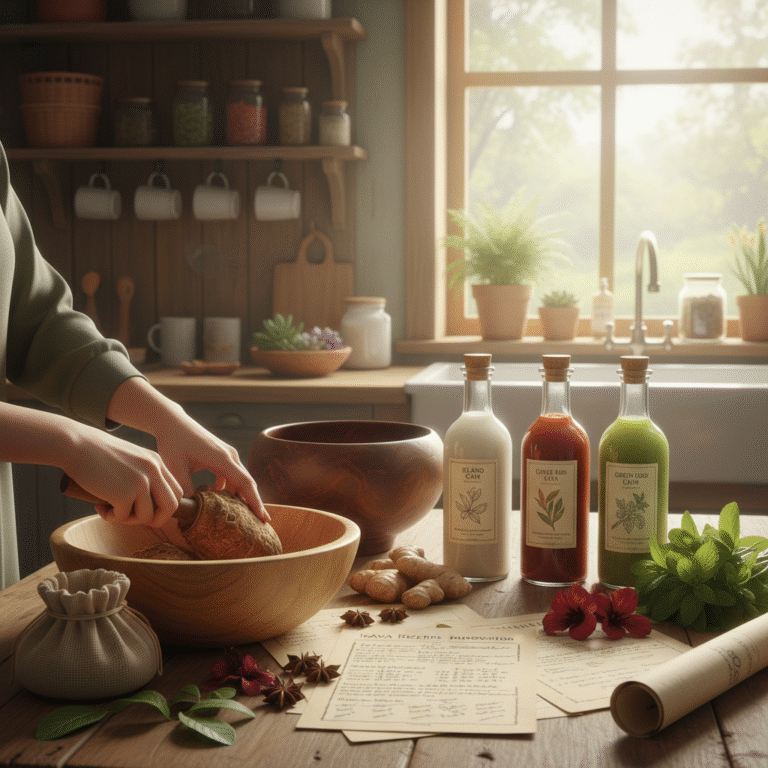
- Grinding or pounding the root: Focus on the rhythmic motion transforming the dried kava root into powder, connecting you with generations past.
- Mixing with water: Add 1–4 tablespoons of kava powder per cup of cool or lukewarm water (never hot to preserve active compounds).
- Kneading and straining: Place mixture in a cloth or strainer bag, kneading gently for 5–10 minutes to extract kavalactones; the repetitive movement anchors meditation.
- Final straining: Squeeze out the muddy, earthy liquid, leaving behind fibrous root material.
Perform these steps in a calm environment—soft music, candlelight, and intention-setting help cultivate reflective space.
Creating the Right Environment
Set up your brewing area to support mindfulness: clear clutter, minimize distractions, and perhaps create an altar or space that feels intentional. This signals to your mind this is sacred time dedicated to the ritual.
DIY Alcohol-Free Fermentation Projects with Kava
While traditional kava is not fermented, modern homebrewers explore fermentation to add complexity, probiotics, and effervescence to kava beverages, expanding non-alcoholic options.
Fermentation Methods for Kava Beverages
- Water kefir base: Combine kava with water kefir grains for probiotic-rich, lightly carbonated drinks.
- Kombucha infusion: Add kava extract during secondary kombucha fermentation for layered acidity and calm.
- Ginger bug fermentation: Use ginger bug cultures to ferment kava-ginger blends for spicy, effervescent beverages.
- Wild fermentation: Experiment with lacto-fermentation alongside fruits or vegetables for unique flavors.
Sustainability in Kava Homebrewing
Ethical sourcing of kava supports Pacific Island farming communities and environmental stewardship. Homebrewing reduces water use, packaging waste, and transport emissions compared to industrial alcohol production.
- Lower water usage
- No industrial distillation
- Bulk purchasing minimizes packaging
- Reusable strainers limit waste
- Local ingredient use reduces carbon footprint
This sustainable approach fosters both environmental responsibility and wellness.
Contemplative Drinking Rituals and Kava Beer
Kava drinking rituals encourage awareness, gratitude, and connection, transforming consumption into meaningful practice.
Creating Personal Kava Rituals
- Intention setting: Clarify what you hope to nurture (peace, clarity, connection) before preparation.
- Gratitude practice: Acknowledge the plant, growers, and cultural heritage.
- Mindful consumption: Savor flavor and effects slowly over 20–30 minutes.
- Reflection time: Journal or converse gently afterward to honor the experience.
Community Kava Ceremonies
- Group meditation or silence to begin
- Sharing of intentions and stories
- Collaborative preparation
- Mindful drinking rounds
- Space for open conversation or silence
- Closing with gratitude or reflections
These sober gatherings strengthen social bonds and create authentic communal presence.
Mindful Brewing Alternatives to Alcohol
Kava beverages offer social and ritual alternatives that maintain presence and connection without alcohol’s downsides.
Kava Versus Traditional Beer
| Aspect | Kava | Alcohol (Beer) |
|---|---|---|
| Mental Effects | Relaxation, mental clarity | Depressant, impaired cognition |
| Social Dynamics | Authentic presence, deep conversation | Inhibition loss, impaired interaction |
| Physical Impact | Non-hangover, supports better sleep | Liver stress, dehydration, poor sleep |
| Dependency Potential | Low | High |
| Caloric Content | Minimal | Moderate to high |
Learn more about these contrasts at what is kava and kava origins.
The Intentional Non-Alcoholic Brewing Movement
This culture values beverages with health, mindfulness, and authentic connection. Categories include:
- Non-alcoholic craft beers
- Kombucha and fermented teas
- Adaptogenic herbal drinks
- Kava and traditional plant beverages
- Complex shrubs and botanical sodas
Homebrewing kava drinks places you at the forefront of this transformative movement.
Sustainable Kava Beverage Recipes for Homebrewers
Traditional Kava Preparation
Ingredients:
- 2–4 tablespoons traditional grind kava root powder
- 8–12 oz cool or lukewarm water
- Strainer bag or cloth
Preparation:
- Place kava powder in strainer bag
- Submerge in water, knead 5–10 minutes
- Squeeze out liquid and serve immediately
Kava Chai Blend
Ingredients:
- 2 tablespoons kava root powder
- 1 cup brewed chai tea (cooled)
- 1 tablespoon coconut milk
- Honey to taste
- Pinch of cinnamon
Preparation:
- Brew strong chai and cool to lukewarm
- Prepare kava using chai tea
- Add coconut milk and honey
- Sprinkle cinnamon atop
Citrus Kava Refresher
Ingredients:
- 3 tablespoons kava root powder
- 10 oz coconut water
- Juice of 1 lime
- 1 teaspoon grated fresh ginger
- Fresh mint leaves
Preparation:
- Prepare kava using coconut water
- Add lime juice and grated ginger
- Strain again if desired
- Garnish with fresh mint
Fermented Kava Ginger Brew
Ingredients:
- 2 tablespoons kava powder
- 1 quart unflavored water kefir
- 2 tablespoons fresh ginger juice
- 1 tablespoon honey
- Juice of 1 lemon
Preparation:
- Prepare kava using half the water kefir
- Combine with remaining kefir, ginger juice, and honey
- Bottle in swing-top bottles
- Ferment at room temperature 24–48 hours
- Add lemon juice before serving, then refrigerate
This recipe blends traditional methods with modern fermentation techniques.
Herbal Kava Sleep Blend
Ingredients:
- 2 tablespoons kava root powder
- 1 cup brewed herbal tea (chamomile, passionflower, lavender)
- 1 teaspoon vanilla extract
- Honey to taste
Preparation:
- Brew herbal tea and cool
- Prepare kava using the herbal tea
- Add vanilla extract and honey
- Consume 1–2 hours before bedtime
Pairing Kava and Beer Mindfulness
Mindful pairing enhances tasting by matching non-alcoholic beer styles with specific kava strains, creating a complex flavor journey.
Understanding Flavor Complementarity
- Kava flavors: earthy, peppery, bitter, occasionally creamy
- Non-alcoholic beers: malt-forward, hoppy, wheat-based, stout varieties
Recommended Pairings
- Earthy kava + Malty non-alcoholic amber: Caramel sweetness balances earthiness, malt body complements mouthfeel.
- Peppery kava + Hoppy IPA: Citrus and pine hops contrast kava’s spice for refreshing balance.
- Smooth kava + Wheat beer: Creamy kava strains harmonize with soft banana-clove esters.
- Heavy kava + Non-alcoholic stout: Roasted, rich flavors complement sedative kava varieties for evening sipping.
Conducting Mindful Tastings
- Prepare a calm, distraction-free space
- Begin with meditation or gratitude
- Taste slowly, noting sensations
- Observe effects on mind and body
- Discuss reflections with others
- Journal tasting notes
Zen Brewing: Alcohol-Free Alternatives
Zen brewing centers on harmony, presence, intention, patience, and gratitude—principles that align perfectly with mindful kava brewing.
Principles of Zen Brewing
- Presence: Fully engage with each brewing moment.
- Intention: Define the purpose of your brew.
- Simplicity: Honor essential ingredients without excess.
- Harmony: Balance flavors, space, and mental state.
- Patience: Allow processes to unfold naturally.
- Gratitude: Appreciate all elements involved.
Integrating Meditation with Brewing
- Breathing meditation while grinding or kneading.
- Walking meditation between brewing steps.
- Sound meditation attentive to mixing and water sounds.
- Body scan meditation synchronizing with kneading rhythms.
These practices extend mindfulness beyond brewing into daily life.
Conscious Homebrewing Kava Experiments
Areas for Exploration
- Strain experimentation: Observe flavor and physiological effects across varieties.
- Extraction methods: Compare kneading, blending, temperature variations.
- Ingredient combinations: Pair kava with herbs, spices, fruits, and teas.
- Fermentation variables: Test starters, durations, temperatures for fermented beverages.
- Serving traditions: Develop rituals and vessel choices enhancing experience.
Documenting Your Journey
Keep a brewing journal tracking:
- Date and intention
- Ingredients and quantities
- Preparation variations
- Mental and sensory observations
- Tasting notes and effects
- Reflections and future ideas
Building Community Through Sharing
- Participate in online kava enthusiast and homebrewing forums.
- Attend or host local kava circles and meetups.
- Exchange recipes and share experiments.
- Collaborate on side-by-side brewing studies.
- Teach mindful kava brewing to friends and community members.
Community extends tradition and enhances mindful consumption culture.
Conclusion
Homebrewing kava root beverages combines ancient wisdom, meditative practice, and modern creativity to offer a rich alternative to alcoholic brews.
Benefits include:
- Mindfulness development: Brewing as meditation cultivates presence.
- Health benefits: Relaxation without hangovers or liver stress.
- Cultural connection: Deep ties to Pacific Island traditions.
- Creative expression: Endless recipe variations for personal exploration.
- Community building: Sharing fosters connection and learning.
- Sustainability: Ethical sourcing and homebrewing reduce impact.
As non-alcoholic brewing gains momentum, kava stands as a time-tested ally supporting wellness, connection, and mindful living.
Take the Next Step in Mindful Brewing
Ready to advance your mindful brewing practice? Subscribe to receive tutorials, recipes, and expert guidance on:
- Advanced kava preparation techniques
- Seasonal beverage recipes
- Meditation practices tailored for brewers
- Sustainable ingredient sourcing
- Interviews with traditional kava practitioners
- Food and kava pairing guides
- Community event planning resources
Join a vibrant, conscious homebrewing network dedicated to creating mindful, sustainable beverages that nourish body, mind, and spirit.
Subscribe today and transform your homebrewing into a mindful ritual filled with peace, connection, and purpose.