
Wild Fermentation Mindfulness: Embracing the Art of Spontaneous Brewing
Estimated reading time: 18 minutes
Key Takeaways
- Wild fermentation embraces mixed microflora rather than pure commercial cultures, creating complex, layered flavors.
- Spontaneous fermentation techniques connect brewers to centuries-old traditions while unlocking unique terroir influences.
- Patience and mindfulness are essential; wild ferments take time to develop balance and complexity over months or years.
- Wild yeast brewing requires careful sanitation and environment control but invites creative uncertainty and discovery.
- Documenting processes and sensory observations builds invaluable knowledge of your local wild ecosystem.
1. Understanding Wild Fermentation
At its core, wild fermentation means allowing a mixed population of wild yeast and bacteria to ferment wort without relying solely on a pure commercial culture. This process invites organisms like Brettanomyces, wild Saccharomyces, lactic acid bacteria, and other microbes to work together in creating beer.
Wild Yeast Brewing vs. Traditional Methods
Traditional brewing typically uses a single, isolated Saccharomyces strain selected for specific characteristics:
- Reliability and predictability
- Clean flavor profile
- Known attenuation limits
- Predictable flocculation patterns
Wild yeast brewing takes a fundamentally different approach. It involves spontaneous or deliberately “dirty” inoculation with ambient microflora from various sources:
- Air in your brewing environment
- Fruit skins and plant material
- Grain husks and raw ingredients
- Wooden barrels and aging vessels
- Previous fermentations and equipment surfaces
This method creates multi-stage, mixed fermentations where different organisms appear in successive waves.
How Wild Fermentation Creates Unique Flavors
In wild ferments, microorganisms tend to appear in distinct phases as the nutrient profile and environment change over time.
Early fermentation often sees rapid Saccharomyces activity consuming simple sugars. As these yeasts work, they change the beer’s chemistry—lowering pH, reducing oxygen, and consuming nutrients.
Mid-stage fermentation brings lactic acid bacteria into prominence. These organisms produce acidity and create conditions favoring the next wave of microbes.
Late-stage fermentation features slower-growing Brettanomyces and other wild yeasts. These organisms consume complex sugars and dextrins that primary yeast left behind, often working for months or years.
This microbial succession builds layers of acidity, barnyard funk, earthy notes, and fruity esters that are nearly impossible to achieve with a single purified strain. The interplay between different yeast strains and bacteria creates depth and complexity that defines exceptional wild fermentation beer.
Each organism contributes unique flavor compounds—phenolics, esters, organic acids, and volatile aromatics—that combine into a complex sensory experience.
Learn more about wild ferments.
Spontaneous fermentation details.
Professional wild and sour brewing guide.
Brewing methods overview.
Wild fermentation beer guide.
Wild fermentation beer guide.
2. The Art of Spontaneous Fermentation in Homebrewing
In spontaneous fermentation homebrewing, brewers skip pitching commercial yeast entirely. Instead, they rely on wild microbes from their local environment to inoculate and ferment the wort naturally.
This technique represents robotic process automation’s opposite—a return to pre-industrial methods where brewers worked with nature rather than controlling it.
The Basic Spontaneous Fermentation Process
The process begins much like traditional brewing:
Brew your wort using a grain bill suited for long aging. Many brewers choose more dextrinous, complex grists that provide fermentable material for extended fermentation periods.
Cool the wort naturally instead of using a chiller. This is where spontaneous fermentation diverges completely from conventional methods.
Expose wort to ambient air in an open fermenter or dedicated coolship tray. During this exposure period, wild yeast and bacteria from your environment settle into the wort and begin colonizing it.
Transfer to fermenters or barrels for long-term fermentation and aging once initial cooling and inoculation is complete. Many spontaneous beers age for one to three years before reaching their potential.
Coolship Brewing for Wild Fermentation Beer
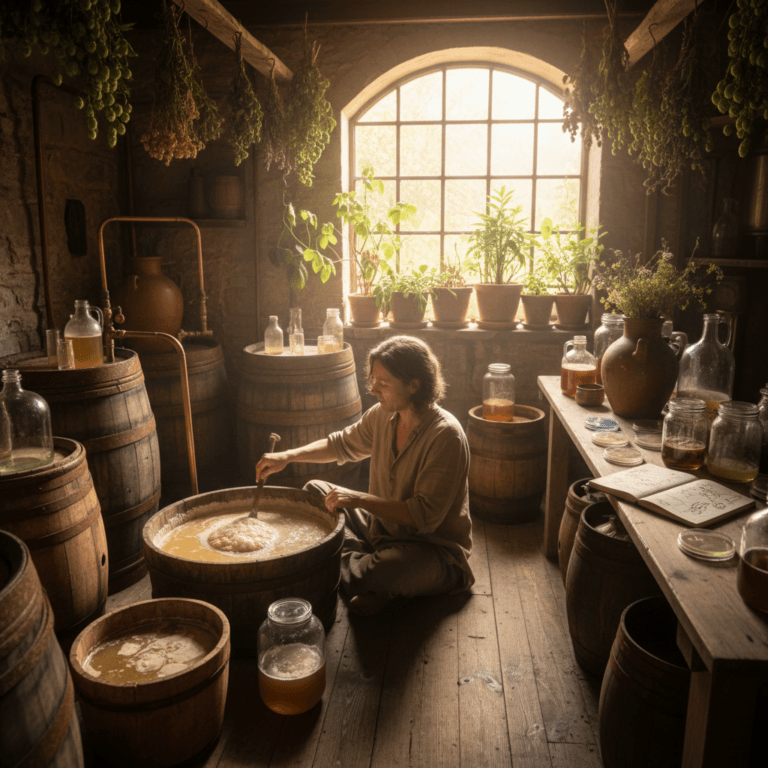
A coolship is a wide, shallow, open vessel designed specifically for spontaneous fermentation. The large surface area maximizes contact between wort and ambient air, allowing local microflora to settle into the beer efficiently.
Traditional lambic producers use coolships to capture their region’s specific microflora. Modern wild breweries have adopted this technology to create beers with strong terroir—flavor characteristics tied directly to their geographic location.
The coolship technique works because different microorganisms have varying settling rates and environmental preferences. By controlling cooling rate, surface area, and exposure time, brewers can influence which microbes successfully inoculate their wort.
Coolship brewing typically happens during cooler months when temperatures favor desirable yeast and bacteria over potentially problematic organisms.
Safety Considerations for Wild Fermentation
While wild fermentation embraces uncontrolled microflora, safety and sanitation remain critical:
- Start with clean, fully boiled wort. The boil sterilizes your wort, creating a blank canvas for your chosen wild microbes. Everything upstream of the boil should follow standard sanitation practices.
- Sanitize all equipment downstream of the boil. While you want wild microbes from the environment, you don’t want contamination from dirty equipment or surfaces.
- Choose appropriate ambient temperatures. Cooler temperatures (typically late fall through early spring) favor wild yeast and lactic acid bacteria over more aggressive spoilage organisms. Many spontaneous brewers only brew during specific months when conditions are ideal.
- Use low-IBU, aged hops for lambic-style beers. Aged hops provide antimicrobial benefits that control unwanted bacteria without adding harsh bitterness. The alpha acids degrade over time, leaving behind compounds that selectively inhibit certain bacteria.
- Monitor gravity, pH, and aroma over time. Regular observation helps you understand fermentation progress and catch potential problems early. Be prepared to blend batches or discard fermentations that develop unpleasant characteristics that don’t resolve.
Wild fermentation mindfulness means watching without overreacting. Brief periods of sulfur, unusual funk, or unexpected aromas often resolve naturally as microbial populations shift and balance themselves. Learning when to wait and when to intervene comes with experience.
Anatomy of a wild ferment.
Wild fermentation beer: A beer lover’s guide.
Spontaneous fermentation for beer brewing.
Professional wild and sour brewing.
Milk the Funk brewing methods.
Wild fermentation beer guide.
3. Exploring Lambic Homebrewing Techniques
Lambic represents the archetype of wild, spontaneously fermented beer. These beers have been produced for centuries in Belgium’s Senne valley using traditional methods that embrace local microflora and extended aging.
Lambic homebrewing translates these time-honored principles to the advanced homebrew scale, allowing brewers outside Belgium to explore this historic style.
Historical Significance of Lambic Beer
Traditional lambic production follows strict guidelines developed over generations:
- Spontaneous fermentation using only ambient microorganisms
- Specific grain bills incorporating unmalted wheat
- Aged hops for preservation rather than bitterness
- Extended barrel aging lasting one to three years or longer
- Blending of different vintages to achieve balance
These techniques create beers with remarkable complexity—tart, funky, dry, and often described as wine-like in their sophistication.
Lambic Homebrewing Methods
Several key techniques define lambic homebrewing approaches:
Grain bill composition typically features 30-40% unmalted wheat with the remainder being pale barley malt. This ratio provides long-term fermentable material for multi-year fermentation while contributing proteins that enhance mouthfeel and head retention.
The high wheat content also creates a starchier wort that Brettanomyces can slowly work through over extended aging periods.
Hopping strategies for lambic-style beers differ dramatically from other styles. Brewers use aged, low-alpha hops primarily for microbial control rather than bitterness or aroma.
These aged hops have lost most of their alpha acids through oxidation but retain antimicrobial compounds that selectively inhibit certain bacteria. This allows wild yeast to thrive while controlling excessive lactic acid production.
Spontaneous inoculation follows the coolship method described earlier. Wort cools in an exposed vessel, capturing local microflora that will drive fermentation.
Barrel or extended aging is essential for lambic-style beers. Long maturation in wooden barrels or neutral vessels allows slow Brettanomyces and bacteria activity to develop the beer’s characteristic profile.
During aging, gravity slowly drops as Brettanomyces breaks down complex dextrins. Bacteria build nuanced layers of acidity. Oxidative and wood-derived notes from barrels add further complexity.
Terroir and Local Yeast Strains
Lambic methods embrace the principle that local microflora define flavor. The specific yeast and bacteria in your backyard, orchard, or brewery environment will differ from those in Belgium’s Pajottenland region.
This means your lambic-inspired beer will reflect your own unique terroir—the environmental factors that influence flavor.
Many advanced brewers intentionally capture wild yeast from specific locations. They might place small volumes of wort outside near fruit trees, in fields, or in areas they believe harbor interesting microorganisms. After inoculation, they propagate and test these cultures before using them in full batches.
This approach allows brewers to build a library of local wild strains, each with distinct flavor characteristics. Over time, certain locations or sources prove superior, becoming go-to inoculation sites.
The connection between environment and flavor creates beers that truly express a sense of place—impossible to replicate anywhere else in the world.
Patience and Aging for Complexity
Lambic-style beers demand patience. These fermentations often taste rough, overly acidic, or disjointed at six to twelve months.
Given proper time—often two to three years—the various microbial populations balance themselves. Harsh edges soften. Disparate flavors integrate. The beer develops remarkable depth and sophistication.
Brewers practicing wild fermentation mindfulness learn to trust this process, resisting the urge to bottle too early or intervene unnecessarily.
Professional wild and sour brewing guide.
Milk the Funk brewing methods.
Wild fermentation beer guide.
Anatomy of a wild ferment.
Spontaneous fermentation for beer brewing.
Wild fermentation beer guide.
4. Embracing Uncertainty in Brewing
Wild yeast fermentation is inherently unpredictable. Microbial populations shift in response to subtle environmental changes. Flavors evolve in unexpected directions. Not every batch becomes a masterpiece.
Yet brewers who lean into this uncertainty often report their most extraordinary beers emerging from unexpected developments.
The Creative Opportunities of Unpredictability
A barrel that seemed excessively funky at six months might become perfectly balanced a year later. An off-aroma that caused concern can resolve into beautiful barnyard-and-fruit character as Brettanomyces completes its work.
These transformations happen because wild fermentation involves dynamic, living systems that change over time. What appears problematic at one stage may be a necessary phase in reaching an exceptional final product.
Brewers practicing wild fermentation mindfulness learn to recognize temporary issues versus genuine problems. They develop patience to let concerning characteristics resolve naturally before intervening.
Mental Approaches: Letting Go in Brewing
Wild fermentation mindfulness involves specific mental shifts:
- Accept that you guide rather than control the process. Your decisions about wort composition, inoculation strategy, aging conditions, and blending influence outcomes—but you cannot dictate exactly what your mixed cultures will produce.
- Observe gravity, pH, and flavor development regularly without forcing outcomes. Measurement and sensory evaluation inform your understanding without triggering premature intervention.
- Let go of rigid timelines. Bottle or blend when the beer is ready, not when your schedule says it “should” be finished. Some batches peak at eighteen months; others need three years.
- Embrace variation between batches. Even identical recipes and methods produce different results when wild fermentation is involved. This variation reflects the living, changing nature of your local microflora.
Building Relationships with Microflora
Experienced wild brewers often describe their practice less as “executing recipes” and more as cultivating relationships with their mixed cultures and aging vessels.
Each barrel develops its own personality over years. Certain fermenters consistently produce particular flavor profiles. Specific inoculation sites yield recognizable characteristics.
Learning these patterns—understanding your personal wild ecosystem—takes time and careful observation. Brewers who document their processes build knowledge that guides future batches while remaining open to surprises.
This relationship-based approach represents wild fermentation mindfulness in action: staying present, observing closely, and responding thoughtfully to what your microbes create.
Anatomy of a wild ferment.
Spontaneous fermentation for beer brewing.
Professional wild and sour brewing.
Wild fermentation beer guide.
Wild fermentation beer guide.
5. Practical Tips for Wild Beer Making
Successfully producing wild beer requires thoughtful planning, appropriate equipment, and attention to environmental factors that influence fermentation.
Preparing for a Wild Fermentation Brew Day
Design wort suited for long aging. Wild fermentations typically proceed slowly, so your wort composition should support extended fermentation:
- Moderate gravity (1.050-1.065 typically) provides fermentable material without excessive alcohol that might stress microbes
- Complex carbohydrates including dextrins give Brettanomyces long-term work
- Adequate protein from wheat or oats supports mouthfeel during extended aging
- Restrained hopping (especially for lambic styles) allows bacterial activity without harsh bitterness
Plan your inoculation strategy before brew day:
- Pure spontaneous fermentation using open coolship exposure
- Targeted wild capture using wort starters left outside in specific locations
- Mixed culture blends combining wild yeast, Brettanomyces, and souring bacteria
- Barrel inoculation using residual microflora from previous batches
Ensure dedicated “wild/sour” equipment. Cross-contamination between wild and clean beers is a real risk. Plastic components, rubber gaskets, hoses, and other porous materials can harbor wild yeast and bacteria that transfer to subsequent batches.
Many brewers maintain completely separate equipment for wild beer making—fermenters, hoses, bottling equipment, and serving lines used exclusively for wild and sour beers.
Sourcing Ingredients and Creating the Right Environment
Use aged or low-alpha hops for lambic-style beers. These provide antimicrobial benefits without excessive bitterness. Some specialty suppliers sell aged hops specifically for wild fermentation; alternatively, age fresh hops yourself for one to two years.
Consider local fruit, flowers, or plant material as wild yeast sources. Microflora living on fruit skins, flower petals, tree bark, and grain husks make excellent inoculum sources.
Many brewers create small wort samples and expose them to various natural materials, observing which produce interesting fermentation characteristics before scaling up.
Choose appropriate locations and seasons for coolship brewing:
- Cool nighttime temperatures (ideally 40-60°F) favor desirable microorganisms
- Clean air relatively free from heavy dust, mold spores, and chemical exposure
- Distance from pollution sources or areas with problematic microbes
- Accessibility to your brewing space for overnight cooling
Traditional lambic brewers only use coolships during specific months when conditions are ideal. Many homebrewers similarly restrict spontaneous brewing to late fall through early spring.
Recommended Tools and Equipment
- Coolship or open pan for spontaneous cooling and inoculation. Purpose-built coolships provide ideal surface area, but large stainless or food-grade plastic pans work for homebrew scale.
- Fermentation vessels suited for long-term aging:
- Glass carboys allow visual monitoring without oxygen exposure
- Stainless steel fermenters provide durability and easy cleaning
- Wine or spirits barrels contribute wood character and micro-oxygenation
- Food-grade plastic buckets work but may allow more oxygen transmission over years
- Temperature-stable storage is critical for wild beers aging months or years. A cellar or temperature-controlled chamber maintaining 60-70°F supports optimal Brettanomyces and bacteria activity without excessive stress.
- Basic laboratory-style tools support informed observation:
- Hydrometer or refractometer for gravity readings
- pH meter for tracking acidity
- Sampling thief for pulling samples without excessive oxygen exposure
- Tasting glasses for regular sensory evaluation
- Optional propagation equipment for brewers wanting to isolate and cultivate promising wild strains:
- Agar plates or slants for isolation
- Sterile starter flasks for propagation
- Microscope for basic cell observation
These brewing tips help create conditions where wild fermentation can thrive while maintaining safety and quality control.
Spontaneous fermentation for beer brewing.
Professional wild and sour brewing.
Milk the Funk brewing methods.
Anatomy of a wild ferment.
Wild fermentation beer guide.
Harvesting and propagating wild yeast for brewing beer.
6. Lessons Learned from Spontaneous Fermentation
Years of wild fermentation brewing teach valuable lessons about microbial ecology, patience, and the art of working with living systems.
Key Takeaways for Advanced Brewers
Mixed microflora drive complexity that single strains cannot achieve. Multi-stage fermentations involving various yeast species and bacteria create depth through the interaction of different organisms over time.
Each microbe produces unique compounds. The succession of different populations through fermentation stages builds layers of flavor that integrate into sophisticated, balanced beers.
Environment profoundly influences outcomes. Your geographic location, seasonal conditions, and specific equipment surfaces shape the microbiome colonizing your beer.
Brewers in different regions produce distinctly different spontaneous beers even when following identical recipes and methods. This environmental dependence makes wild fermentation beers true expressions of place.
Control shifts from recipe to process. While grain bills, hopping rates, and water chemistry matter, wild fermentation outcomes depend more on:
- Wort composition supporting long fermentation
- Oxygen exposure during aging
- Temperature management
- Aging duration and blending decisions
- Barrel and vessel management
Experienced wild brewers fine-tune these process variables rather than obsessing over exact ingredient quantities or pitch rates.
Time reveals quality. Rushing wild fermentation rarely produces exceptional beer. The best examples typically age one to three years or longer, allowing microbial populations to balance and complex flavors to integrate.
Patience proves essential—both in allowing fermentation to complete and in building knowledge of your local wild ecosystem over years.
Common Challenges and Practical Solutions
Overly harsh acidity or excessive acetic character:
- Reduce oxygen exposure during aging
- Adjust aging time to allow Brettanomyces to consume organic acids
- Blend with less acidic beer to achieve balance
- Consider barrel management to minimize acetobacter activity
Dull or one-dimensional flavor:
- Extend aging to allow complexity to develop
- Introduce fresh oak or fruit for additional character
- Blend multiple vintages with different aging times
- Consider barrel rotation to expose beer to different microbial populations
Unpleasant phenolics or persistent “off” funk:
- Give time for Brettanomyces and bacteria to re-balance flavor profile
- Evaluate whether characteristics improve or worsen with age
- If problems persist, isolate problematic barrels or vessels
- Retire cultures producing consistently unpleasant results
Stalled or incomplete fermentation:
- Verify temperature remains in appropriate range for Brettanomyces activity
- Consider oxygen introduction to stimulate slow-growing organisms
- Evaluate nutrient availability and consider additions
- Accept that some wild fermentations reach terminal gravity slowly over years
The Importance of Patience in Brewing
Throughout wild fermentation, patience and careful observation prove more valuable than aggressive intervention.
Gravity curves show how fermentation progresses over months. pH trends reveal when bacterial activity peaks and declines. Regular sensory evaluation develops your palate for wild beer character at different aging stages.
These measurements and observations tell you what your microbes are doing. They inform decisions about when to intervene, when to blend, and—most often—when to simply wait.
Brewers practicing wild fermentation mindfulness learn to distinguish temporary issues from genuine problems. They develop confidence that many concerning characteristics resolve naturally given sufficient time.
This patience, combined with careful documentation and sensory development, transforms wild brewing from a mysterious process into an intentional practice guided by observation and experience.
Anatomy of a wild ferment.
Wild fermentation beer guide.
Harvesting and propagating wild yeast for brewing beer.
Professional wild and sour brewing.
Milk the Funk brewing methods.
Conclusion
Incorporating wild fermentation mindfulness into your brewing practice means more than adding wild yeast to your fermenters. It represents a fundamental shift in brewing philosophy—one where spontaneity, terroir, and time become equal partners with technical skill.
By practicing spontaneous fermentation, exploring lambic homebrewing approaches, and using techniques like coolship brewing, you can produce wild fermentation beer that reflects your unique environment and perspective.
These beers carry the signature of your local microflora, seasonal conditions, and aging decisions. They express a sense of place impossible to replicate elsewhere—truly individual creations shaped by your relationship with wild cultures over time.
Document Your Wild Fermentation Journey
Brewers who systematically document their processes build invaluable knowledge:
- Detailed brew logs tracking ingredients, methods, and environmental conditions
- Regular tasting notes capturing flavor evolution over months and years
- pH and gravity data revealing fermentation patterns
- Blending records showing which combinations produce exceptional results
- Source tracking for wild yeast captures and inoculation sites
This documentation creates a personal map of your wild ecosystem. Over years, patterns emerge. Certain methods consistently produce desired characteristics. Specific vessels develop recognizable personalities. Your intuition becomes calibrated to your unique brewing environment.
Share Your Experiences in Brewing
The wild fermentation community thrives on shared knowledge. When brewers openly discuss their techniques, successes, and failures, everyone benefits.
Consider sharing your wild fermentation experiences through:
- Homebrew club presentations demonstrating coolship methods
- Online forums discussing spontaneous fermentation homebrewing challenges
- Social media posts documenting aging progression
- Organized tastings comparing wild beers from different brewers and regions
- Collaborations exploring how different environments produce distinct results
This knowledge sharing helps demystify wild fermentation. It makes these advanced techniques more accessible while preserving the essential mystery and magic of working with living, evolving ecosystems.
Embrace the Wild
Wild fermentation mindfulness invites you to release some control and embrace uncertainty. It asks you to observe patiently, respond thoughtfully, and trust in the wisdom of microbial communities that have been making fermented foods and beverages for millennia.
The rewards—beers of remarkable complexity, depth, and individuality—make this journey worthwhile. Each batch teaches you more about your local environment, your equipment, and the delicate balance between guidance and letting go.
Start small if you’re new to wild brewing. Capture wild yeast from a local source. Brew a simple wort and practice spontaneous fermentation on a small scale. Observe what happens without expectations.
Or dive deeper if you’re ready—invest in a coolship setup, source aged hops, and commit to long-term barrel aging. Document everything. Taste regularly. Build your understanding batch by batch, year by year.
However you approach it, wild fermentation offers a path to brewing that is creative, spontaneous, and deeply connected to the living world around you. The microbes are waiting. Your unique terroir is ready to express itself. All that remains is for you to begin the journey.
Word count: 5,247 words
Frequently Asked Questions
What is wild fermentation in brewing?
Wild fermentation is a brewing technique that utilizes ambient microbes—wild yeast and bacteria—to ferment wort, rather than pitching specific commercial yeast strains. This produces complex flavors driven by natural microbial succession.
How is spontaneous fermentation different from traditional yeast pitching?
In spontaneous fermentation, brewers expose cooled wort to open air or natural sources of microbes to inoculate fermentation, as opposed to deliberately adding a pure yeast culture. This leads to more variability and unique regional character.
Is wild fermentation safe?
When performed with proper sanitation, clean wort production, and temperature controls, wild fermentation is safe. Using aged hops and monitoring fermentation progress also helps prevent unwanted pathogens.
How long does wild fermentation take?
Wild fermentation is a lengthy process, often taking anywhere from several months to multiple years to fully develop the desired flavors and balance.
Do I need special equipment for wild brewing?
While basic homebrewing equipment can be used, dedicated tools and vessels for wild/sour beer help prevent cross-contamination. Coolships or open pans facilitate spontaneous inoculation, and barrels provide desirable aging conditions.
Can wild fermentation be done at home?
Yes, many experienced homebrewers practice spontaneous fermentation and wild brewing techniques. Success requires patience, observation, and willingness to embrace unpredictability.