


Beer and Civilization: How Ancient Brews Built Human Society
Estimated reading time: 15 minutes
Key Takeaways
- Beer played a pivotal role in the transition from nomadic to settled agricultural societies.
- Archaeological evidence supports the concept of beer before bread, highlighting the importance of fermented beverages in early rituals and social cohesion.
- Beer fueled economic, technological, and social innovations that shaped ancient civilizations such as Mesopotamia and Egypt.
- Communal beer consumption enhanced social bonds, labor organization, and cultural practices—a foundation for civilization itself.
- The legacy of ancient brewing traditions continues to influence modern craft beer culture worldwide.
Table of Contents
- Beer Before Bread: The Ancient Beer Society Origin Stories
- The Role of Beer in Agriculture and Cultivation
- Ancient Beer Societies in Mesopotamia and Egypt
- Beer and Social Cohesion in Early Communities
- Neolithic Beer and Settlement Patterns
- Beer Cultivation History Through the Ages
- Beer Building Civilization: A Comprehensive View
- Conclusion
- Share Your Story
- Explore Further
Beer Before Bread: The Ancient Beer Society Origin Stories
The debate about whether beer came before bread has been settled by archaeology. The evidence is clear: beer before bread was the reality for our ancestors.
At Raqefet Cave in Israel, researchers discovered 13,000-year-old residues of a gruel-like beer. This wasn’t just any ancient beverage—it was used in Natufian funerary rites. These ceremonies took place before widespread cereal farming began around 10,000 BC. Think about that for a moment. Our ancestors were brewing beer to honor their dead before they were even baking bread to feed the living.
The Natufians were still hunter-gatherers when they made this discovery. They hadn’t settled into permanent farming communities yet. But they had already figured out fermentation and recognized its importance for their most sacred rituals.
Chemical Proof From Ancient Sites
Modern science has given us tools to peer into the past with remarkable precision. Chemical analysis has confirmed the presence of barley beer at Godin Tepe in Iran, dating from 3500 to 3100 BC. Even more impressive, evidence of Pre-Pottery Neolithic beer production has been found at Göbekli Tepe in Turkey, dating from 8500 to 5500 BC.
Göbekli Tepe is particularly fascinating because it represents a massive construction project undertaken by people who were still transitioning from nomadic to settled life. The presence of beer production at this site isn’t coincidental.
How Beer Changed Society
Ancient beer society structures evolved significantly:
- Reliable fermentation required stored grains, encouraging permanent settlements
- Labor division emerged as brewing became specialized work
- Social hierarchies formed around control of grain supplies and brewing knowledge
- Communal feasting centered on beer created new forms of social organization
The shift from nomadic hunting and gathering to settled agricultural life was one of the most important transitions in human history. For decades, historians assumed this change was driven purely by the need for food security. But the archaeological evidence increasingly suggests that beer played an equally important role.
Early civilizations in Mesopotamia didn’t just happen by accident. They were built on foundations that included reliable beer production as a core element. The desire for consistent access to fermented beverages may have been just as powerful a motivator as the need for daily bread.
Sources: Wild Hunt |
Wikipedia – History of Beer |
Brigadoon Brewery
The Role of Beer in Agriculture and Cultivation
The relationship between beer and agriculture transformed human civilization. This connection wasn’t just important—it was revolutionary.
Early humans harvested wild grasses abundantly near the Jordan River. But the cultivation of barley and emmer wheat was likely driven by beer demand, not bread demand. Our ancestors wanted a reliable supply of the ingredients needed for brewing. This desire pushed them to transition from simply gathering wild plants to actively farming domesticated varieties.
Think about the effort involved in this transition. Farming required people to:
- Stay in one place throughout growing seasons
- Develop new tools for planting and harvesting
- Build storage facilities for harvested grain
- Protect crops from animals and weather
- Learn when and how to plant for best yields
All of this work makes sense if the payoff was significant. Beer provided that payoff.
The Nutritional Power of Beer
Anthropologist Solomon Katz made a crucial observation about early beer. He noted that fermented grain provided essential proteins that were absent in unfermented grains. This made beer a nutritional staple, not just a recreational drink.
For nomadic groups considering whether to settle down, this nutritional advantage would have been compelling. Beer offered:
- More bioavailable nutrients than raw grain
- Safer consumption than potentially contaminated water
- Calories in an easily digestible form
- Vitamins produced during fermentation
This nutritional profile lured nomads to settlements over 10,000 years ago. The promise of regular access to this superior food source made the risks and challenges of settled life worthwhile.
The Feedback Loop Between Brewing and Farming
Beer cultivation history reveals a fascinating feedback loop. Beer fueled agriculture, while farming scaled brewing. Each advancement in one area enabled progress in the other.
In Sumerian practices, we see this relationship clearly. Beer rations motivated labor. Workers weren’t just paid in grain—they were paid in beer. This created a powerful incentive system that drove agricultural production to new levels.
- Increased grain production to meet brewing demands
- Development of better storage techniques to preserve brewing ingredients
- Innovation in farming tools to increase yields
- Creation of specialized brewing knowledge and techniques
This mutually reinforcing relationship between beer and agriculture helped establish the foundation for complex civilizations.
Sources: Wild Hunt |
Beer Institute |
Brigadoon Brewery |
One of Everything
Ancient Beer Societies in Mesopotamia and Egypt
The ancient beer society structures of Mesopotamia and Egypt reveal just how central beer was to daily life, religion, and social organization.
Beer in Mesopotamia
In Mesopotamia, the Sumerians called beer “sikaru” between 3500 and 3100 BC. They didn’t view it as just another drink. They considered it a divine gift worthy of reverence and celebration.
A 3900-year-old poem dedicated to Ninkasi, the goddess of beer, contains the oldest known beer recipe. This wasn’t just a casual mention in some dusty text. This was a detailed hymn that preserved brewing knowledge in poetic form, ensuring it would be remembered and passed down through generations.
The importance of beer in Sumerian society shows up in many ways:
- Workers in the city of Uruk received beer as part of their wages
- Hammurabi’s code included specific regulations governing taverns
- Temple records meticulously tracked beer production and distribution
- Religious ceremonies incorporated beer as a sacred element
The regulation of taverns in Hammurabi’s code is particularly telling. These laws dealt with everything from fair pricing to the quality of beer served. A society doesn’t create detailed legal codes around something unless it’s absolutely central to daily life.
Egyptian Brewing Traditions
The Egyptians took beer equally seriously. They brewed primarily from barley and emmer wheat, creating beverages that were thick, nutritious, and safer to drink than water from the Nile.
Egyptian beer served multiple functions:
- Nutritional source: Provided calories and nutrients for workers and families
- Religious offering: Used in ceremonies and temple rituals
- Medical ingredient: Mixed with medicines and used in treatments
- Daily beverage: Consumed by people of all social classes
One fascinating aspect of Egyptian brewing was who did the work. Women and priestesses were often the brewers. This wasn’t considered low-status work. Brewing knowledge was valued, and those who possessed it held important positions in society.
Brewing as Sacred Practice
Across ancient civilizations, brewing rituals integrated beer into religious ceremonies. In Babylonia and at sites like Ebla around 2500 BC, beer wasn’t just consumed—it was offered to gods, used in purification rites, and incorporated into major festivals.
This sacred dimension of beer production elevated it beyond mere craft. Brewing became a form of worship, a way to connect with divine forces, and a method of maintaining cosmic order. The beer social cohesion created through these shared rituals helped bind communities together with bonds stronger than simple economic ties.
Sources: Brigadoon Brewery |
Wikipedia – History of Beer |
One of Everything |
Silos Brewing
Neolithic Beer and Settlement Patterns
The connection between neolithic beer production and human settlement patterns reveals how deeply fermented beverages influenced where and how our ancestors lived.
Göbekli Tepe stands as one of the most remarkable archaeological sites in the world. This massive complex of stone monuments was built around 8500 BC by people who were still transitioning from hunting and gathering to settled agriculture. The site shows clear evidence of seasonal settlements specifically organized for beer-fueled rites.
Beer-Driven Architecture
Residues found at Göbekli Tepe link fermentation directly to monument construction. This wasn’t a coincidence. The evidence suggests that:
- Large gatherings required substantial quantities of beer
- Beer production necessitated grain storage facilities
- Communal feasting around beer justified the effort of construction
- The monuments themselves may have served partly as brewing facilities
This pattern predates full agriculture by thousands of years. People were building permanent structures for beer-related ceremonies before they were building permanent houses for daily living.
From Nomadic Feasting to Permanent Villages
The evidence from Raqefet Cave, dating back 13,000 years, ties beer to semi-nomadic feasting practices. Small groups would gather periodically at favored locations to brew beer and conduct rituals. Over time, these temporary gathering places evolved into permanent settlements.
The transition happened because brewing demanded infrastructure:
- Grain storage: Fermentation required keeping grain dry and safe from pests
- Processing facilities: Grinding stones and vessels for mashing and brewing
- Water access: Reliable sources near brewing locations
- Fire pits: Controlled heat for various stages of production
Once communities invested in building these facilities, abandoning them to resume nomadic life became less attractive. The infrastructure for brewing became the foundation for settled villages.
Seasonal Patterns and Settlement Density
Beer and settlement patterns also show seasonal variations. During harvest times, communities would gather in larger numbers. Beer production from the harvest would fuel celebrations that reinforced social bonds and redistributed resources.
These seasonal gatherings served multiple purposes:
- Allowed dispersed groups to maintain cultural ties
- Facilitated marriage arrangements between groups
- Enabled trade and exchange of goods
- Created opportunities to share knowledge and techniques
Over generations, some of these seasonal gathering sites transformed into year-round settlements. The presence of brewing infrastructure, combined with nearby agricultural fields, created conditions that supported permanent occupation.
Sources: Wild Hunt |
Wikipedia – History of Beer |
Brigadoon Brewery
Beer Cultivation History Through the Ages
The evolution of beer cultivation history from ancient Mesopotamia to modern practices reveals how brewing techniques advanced alongside civilization itself.
The Spread to Europe
Brewing knowledge spread from Mesopotamia to Europe through Germanic and Celtic tribes by 3000 BC. These early European brewers adapted Middle Eastern techniques to their own environments and ingredients.
Initial European brewing was domestic in nature. Families brewed small batches using whatever was available:
- Local fruits for flavor and sugar
- Honey for sweetness and fermentation
- Native herbs for preservation and taste
- Wild yeasts captured from the air
Hops, which we now associate strongly with beer, didn’t enter the picture until much later. The first documented use of hops in brewing comes from France in 822 AD.
Monastic Innovation
Monasteries became centers of brewing excellence during the Middle Ages. Monks approached brewing with the same systematic rigor they applied to prayer and manuscript copying. This led to significant advances:
- Standardization of grain selection and preparation
- Better control of fermentation temperatures
- Improved sanitation practices
- Development of brewing as a year-round activity
The introduction of hops proved revolutionary. By the 13th century in Germany, hops had become standard in brewing. This wasn’t just about flavor—hops provided natural preservation, allowing beer to be stored longer and transported further distances.
Agricultural and Technical Progress
The advancement of brewing techniques coincided with broader agricultural innovations. Larger kettles allowed bigger batches. Better understanding of fermentation timing improved consistency. Metal tools replaced wooden implements, increasing durability and cleanliness.
Beer before bread continued to influence agricultural priorities even in medieval Europe. Some of the best farmland was dedicated to barley for brewing rather than wheat for bread. This reflects the continued economic and cultural importance of fermented beverages.
Trade and Standardization
As brewing techniques improved, beer became an important trade commodity. Cities developed reputations for particular styles. Trade guilds established quality standards. Governments enacted laws regulating production and sale.
This professionalization of brewing created economic incentives for further innovation. Brewers who could produce better beer, or produce it more efficiently, gained competitive advantages. This drove continuous improvement in techniques and equipment.
The parallel between agricultural innovations and brewing advances wasn’t coincidental. Better plows meant more grain. Better grain storage meant more reliable brewing. Better brewing techniques meant higher demand for grain. The feedback loop between beer and agriculture that started in Neolithic times continued to drive progress for thousands of years.
Sources: Brigadoon Brewery |
Wikipedia – History of Beer |
One of Everything |
Silos Brewing
Beer Building Civilization: A Comprehensive View
Beer as Economic Driver
Beer functioned as much more than just a beverage. It served as a trade good that facilitated commerce across vast distances. Different regions produced different styles, creating demand for exchange and establishing trade routes.
In cities like Uruk, beer rations formed the basis of the labor economy. Workers received payment partly or entirely in beer. This created a monetized economy before actual money existed. The value of labor could be calculated in measures of beer, allowing for complex economic planning and organization.
Driving Division of Labor
Beer production required specialized knowledge and skills. As societies grew larger, brewing became a profession rather than a household task. This specialization was one of many forms of division of labor that characterized emerging civilizations.
Specialized brewers needed:
- Farmers to grow grain
- Potters to make vessels
- Merchants to distribute product
- Administrators to manage rations
Each specialization created demand for other specializations. The web of interdependence grew more complex, binding communities together through economic necessity and mutual benefit.
Technology and Innovation
The demands of brewing drove technological innovation. Fermentation required understanding temperature control, timing, and contamination prevention. These challenges pushed early brewers to develop new techniques and tools.
Key innovations sparked by brewing needs:
- Improved pottery fired at higher temperatures
- Better seals to prevent spoilage
- Standardized measurements for consistent results
- Record-keeping systems to track production
Some historians argue that the need to track beer rations and production may have contributed to the development of writing. When you need to record who received how much beer, and when, and from which batch, you need a system more sophisticated than memory.
From Ritual to Industry
The journey from Natufian funeral rites to Sumerian economic systems shows how beer evolved from sacred substance to economic staple. Yet even as brewing became industrialized, it never completely lost its ritual and social dimensions.
Modern craft brewing echoes the ancient ingenuity of early brewers. Today’s craft brewers experiment with ingredients and techniques much like their Neolithic predecessors did. They create beers for special occasions and communal celebrations, continuing traditions that stretch back thousands of years.
The Foundation of Grain Societies
Beer underpinned grain societies across Eurasia and North Africa. Wherever barley and wheat grew, brewing followed. This created cultural complexes centered around grain agriculture that shared certain characteristics:
- Permanent settlements near arable land
- Seasonal cycles tied to planting and harvest
- Social hierarchies controlling grain distribution
- Religious practices incorporating grain and beer
These grain-based civilizations developed writing, mathematics, organized religion, and state-level political organization. While beer wasn’t the only factor in these developments, its role as both economic good and social lubricant made it a crucial element in the civilization-building process.
Sources: Wild Hunt |
Brigadoon Brewery |
Wikipedia – History of Beer |
Beer Institute |
Silos Brewing
Conclusion
The relationship between beer and civilization runs deeper than most people imagine. Beer wasn’t just a pleasant side effect of agricultural society—it was a driving force that shaped human development at fundamental levels.
From its role as a nutritional catalyst that made settled agriculture worthwhile, to its function as social binder in ancient societies, beer influenced human choices and behaviors in profound ways. The 13,000-year journey from Natufian funeral rites to modern craft breweries tells a story about human creativity, social organization, and our drive to build communities.
The multifaceted role of beer in human history encompasses:
- Nutritional benefits that encouraged agricultural settlement
- Economic functions as trade good and labor payment
- Social bonding through communal consumption
- Religious and ritual significance across cultures
- Technological driver spurring innovation in multiple fields
These influences don’t just belong to ancient history. Beer continues to play important cultural roles today. Craft brewing has experienced a renaissance, with small producers experimenting with ingredients and techniques in ways that would be familiar to ancient Sumerian brewers. Social gatherings still center around shared drinks. Harvest festivals still celebrate the fruits of agricultural labor with fermented beverages.
Understanding this history changes how we think about civilization itself. The great monuments of antiquity—the pyramids, the ziggurats, the stone circles—weren’t built by slaves driven by whips. They were built by workers motivated by community bonds, religious devotion, and yes, regular rations of beer.
The next time you enjoy a beer, whether at a festival, a family gathering, or a quiet moment alone, you’re participating in a tradition that stretches back to the very dawn of civilization. You’re connecting with ancestors who discovered that fermented grain could do more than just provide calories—it could bring people together, make hard work more bearable, and turn a collection of individuals into a community.
Sources: Wild Hunt |
Wikipedia – History of Beer |
Beer Institute
Explore Further
If this article sparked your curiosity about alcohol’s role in history, consider these next steps:
- Read translations of the Sumerian Ninkasi hymn to see the oldest beer recipe preserved in poetic form
- Visit museums with exhibits on ancient brewing techniques
- Explore archaeological sites or their replicas to see where ancient brewing took place
- Research traditional brewing methods from your own cultural background
Further reading: One of Everything |
Wikipedia – History of Beer

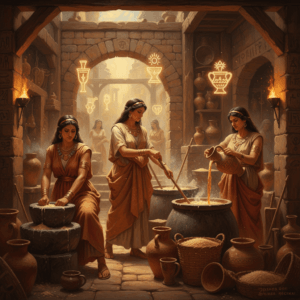

Beer and Social Cohesion in Early Communities
The power of beer and social cohesion extended far beyond simple intoxication. Communal beer drinking fostered bonds and cooperation in ways that fundamentally shaped human social evolution.
At Göbekli Tepe, gatherings centered around beer facilitated in-group unity. But they did something even more remarkable—they enabled peaceful contact with outsiders through ritualized sharing. When strangers met over beer, they established common ground and reduced the risk of conflict.
The Social Functions of Shared Drinking
Sharing fermented beverages created unique social dynamics:
These effects weren’t accidental. The mild alcohol content of ancient beer aided social interaction without causing heavy intoxication. Early brews were typically lower in alcohol than modern beers, creating a gentle relaxation rather than severe impairment.
Beer in Labor Organization
In Sumer and Egypt, beer-centered festivals and rations promoted labor coordination on a massive scale. Building pyramids, temples, and irrigation systems required thousands of workers cooperating over extended periods. Beer rations helped make this cooperation possible.
Workers knew they would receive regular beer portions. This wasn’t just payment—it was a form of social contract. Employers who provided good beer gained reputations as fair and generous. Workers who performed well earned larger rations.
The Civilization-Building Effects of Inebriation
Some researchers argue that this “inebriation” may have spurred civilization by enhancing group dynamics in early societies. The theory suggests that mild, controlled intoxication from beer consumption:
This doesn’t mean ancient peoples were constantly drunk. Rather, beer consumption created regular opportunities for positive social bonding that reinforced the behaviors necessary for civilization to function.
The ritualized nature of beer consumption was crucial. When drinking followed established patterns and rules, it became a tool for social organization rather than social chaos. Communities that mastered this balance gained significant advantages in coordination and cooperation.
Sources: Wild Hunt |
Brigadoon Brewery |
First Key