
Ancient Egyptian Beer: Brewing, Rituals, and Daily Life Along the Nile
Estimated Reading Time: 18 minutes
Key Takeaways
- Ancient Egyptian beer was a thick, nutritious “liquid bread” fundamental to daily life, economy, and religion.
- Worker rations included generous daily beer allocations that supported physical labor in pyramid building.
- Brewing methods involved wild fermentation, bread-mashing, and natural sweeteners like dates and honey.
- Beer held deep religious significance, linked to deities such as Hathor, the goddess of joy and intoxication.
- Modern homebrewers can recreate Egyptian-style ales by adapting ancient ingredients and processes.
Table of Contents
What Was Ancient Egyptian Beer?
Ancient Egyptian beer bore little resemblance to the fizzy, golden lagers we pour from bottles today. Instead, imagine a thick, cloudy beverage with low carbonation and often low alcohol content—somewhere between a hearty soup and a modern ale.
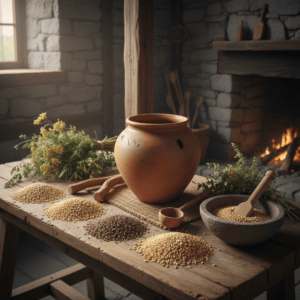
The primary ingredients were barley and emmer wheat, two grains that thrived in the Nile’s rich floodplain. Brewers would sometimes bake these grains into bread loaves, then crumble the bread into water to begin fermentation. This unique method gave Egyptian beer its distinctive thick, brothy consistency.
The brewing process relied on wild yeasts for fermentation rather than cultivated strains. Without refrigeration or modern filtration, the result was a beverage consumed fresh, often while still actively fermenting. The texture was grainy and substantial—truly earning its nickname as liquid bread.
Why Beer Was Essential in Ancient Egypt
- A daily beverage for adults and children alike
- A key source of calories that supplemented bread in the diet
- A vital source of B vitamins from the yeast and grain
- Safe hydration that was more reliable than potentially contaminated Nile water
Children drank it. Laborers depended on it. Even the deceased were buried with jars of beer for the afterlife. The Egyptian beer history shows us a society that structured entire systems of production, distribution, and religious practice around this single beverage.
Different Types of Ancient Egyptian Beer
Not all Egyptian beer was created equal. The ancient brewers produced various types for different occasions and social classes:
- Everyday Beer: Thick, brothy, low alcohol, fuel for workers.
- Festival and Temple Beer: Stronger alcohol content for religious ceremonies.
- Royal Honey Beer: Premium brews sweetened with honey and spices, found in Tutankhamun’s tomb.
The variety in ancient Egyptian beer reflects a sophisticated understanding of fermentation and ingredient selection that influenced brewing traditions for millennia.
Beer in Ancient Egyptian Society
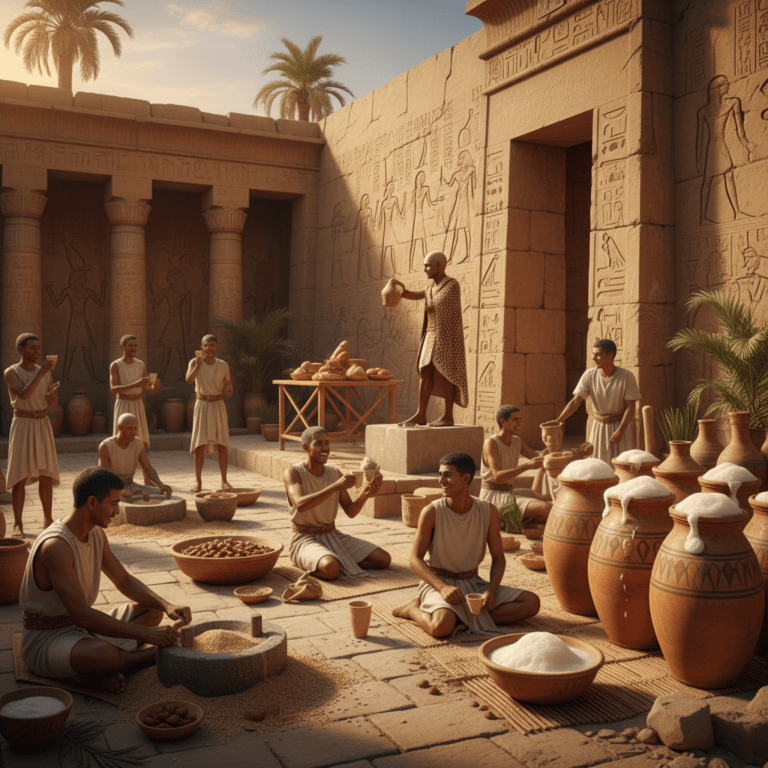
Beer in ancient Egypt was more than a drink; it permeated social structures from palace elites to laborers on construction sites.
Beer Across All Social Classes
This was a truly democratic beverage:
- Pharaohs enjoyed refined honey beers in golden cups.
- Scribes received beer rations as part of compensation.
- Farmers shared communal jars after days in the fields.
- Children drank weaker beer as safe nutrition.
The universal consumption unified Egyptian society around a shared cultural experience.
Beer as Wages and Economic Currency
Workers were paid with beer as part of their daily wages. Pyramid builders’ beer rations included:
- Bread loaves
- Beer jars
- Occasional meat or fish
This system turned beer into a de facto currency, varying in quality depending on social status.
Religious and Ceremonial Importance
Temples brewed thousands of jars of beer for ritual use:
- Temple offerings: Libations poured to nourish gods.
- Funeral rites: Beer supplied for the afterlife journey.
- Festival celebrations: Communal drinking in festivals like the Feast of Hathor.
Beer as a Divine Gift
Beer was seen as a gift from the gods, linking brewers and drinkers to divine forces. The goddess of beer in Egypt, Hathor, Osiris, Sekhmet, and Bastet all had roles associated with beer.
A Brief History of Egyptian Beer
The origins of Egyptian beer history reach back over 5,000 years to the early dynastic period around 3100 BCE.
Early Origins and Industrial Scale
Archaeological finds at Abydos reveal massive brewery complexes designed to supply temple ceremonies and royal courts on an industrial scale.
Evolution Through Egyptian Dynasties
Brewing evolved from bread-based fermentation in the Old Kingdom to more refined mash styles in the New Kingdom, involving crushing grain directly and adding sweeteners.
Key Archaeological Discoveries
- The Abydos Brewery: The largest ancient brewery found, showing industrial-scale production.
- Amarna Brewery Complex: Detailed equipment for New Kingdom brewing methods.
- Residue Analysis: Evidence of emmer wheat as the main grain and lack of hops in recipes.
- Tomb Models and Paintings: Visual depictions of brewing steps and facilities.
Ancient Egyptian Brewing Methods
Egyptian brewing methods combined natural ingredients and empirical knowledge to create a reliable fermentation process without modern technology.
Core Ingredients
- Barley and Emmer Wheat: Foundations of ancient Egyptian beer grain bill.
- Dates and Honey: Natural sweeteners enhancing flavor and fermentable sugars.
- Herbs and Spices: Coriander, juniper, and possibly mandrake added aroma and medicinal properties.
- Wild Yeast: Fermentation occurred by exposure to natural yeasts in the environment.
Notably, Egyptian beer contained no hops, unlike modern brews.
The Traditional Brewing Process
- Grain Preparation: Baking bread-like loaves from barley or wheat, retaining yeast and enzymes.
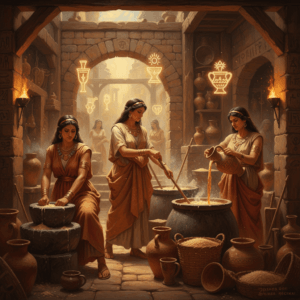
- Mashing: Crumbling bread into water to create a porridge-like mash.
- Adding Sweeteners: Dates or honey mixed in for sugars and flavor.
- Spontaneous Fermentation: Transfer to jars where wild yeast fermented the wort naturally.
- Straining and Storage: Removing solids before storage in ceramic vessels.
Comparison with Modern Brewing
Modern brewers control temperature and yeast strains; Egyptians relied on natural methods with fewer steps. Both share fundamental principles of mashing, fermentation, and flavoring, though Egyptian beer was cloudier, thicker, and lower in alcohol.
Daily Beer Rations for Workers
The ancient Egypt daily beer rations system was key to sustaining laborers building pyramids and temples.
Beer as Payment and Essential Rations
- Typically 10 bread loaves and 3+ jars of beer daily per worker.
- Approximately 1⅓ gallons of beer consumed daily.
- Distributed at morning, midday, and evening to maintain energy and hydration.
The Nutritional Role of Worker’s Beer
- Caloric Density: Provided 800-1,200 calories per gallon.
- B Vitamins: Supplied critical thiamine, riboflavin, and niacin.
- Hydration: Safer than Nile water, low alcohol allowed safe consumption in volume.
- Protein and Amino Acids: Supplemented primarily bread-based diets.
- Digestibility: Fermentation enhanced nutrient absorption.
Historical Significance of Beer Rations
Ration records disprove myths of slave labor; workers were compensated and organized with medical and housing facilities. The system demonstrates bureaucratic sophistication supporting massive state projects.
The Goddess of Beer – Hathor and Others
Beer’s sacred role is embodied by Hathor, the goddess of beer in Egypt, who presided over joy, intoxication, and fertility.
Hathor: The Lady of Drunkenness
Hathor was venerated as:
- The Lady of Drunkenness: Ritual intoxication viewed as spiritual communion.
- Provider of sustenance: Symbolized nourishment like milk and beer.
- Myth of Sekhmet: Ferocious goddess subdued by beer colored blood to end her rampage.
Festivals honored Hathor with days of celebratory drinking, music, and dance.
Other Beer-Associated Deities
- Osiris: Credited as teacher of brewing to humanity.
- Sekhmet: Fierce aspect transformed by beer intoxication.
- Bastet: Festival with massive celebration including beer and wine drinking.
Sacred Drinking and Beer Offerings
- Temple offerings: Beer as nourishment for gods.
- Ritual intoxication: Celebrated as a sacred state, not vice.
- Funerary beer: Supplied the dead for eternal sustenance.
These beliefs created a sacred framework elevating beer from mere drink to divine gift.
Ancient Egyptian Beer Recipes & a Modern Adaptation
Thanks to archaeological studies and experimental brewing, recreations of ancient Egyptian beer recipes are now possible.
Insights from Archaeological Reconstructions
- The British Museum brew used emmer wheat, dates, and no hops – sweet, thick, low alcohol.
- University experiments confirmed emmer wheat base and quick ambient fermentation.
- Craft breweries worldwide produce Egyptian-inspired ales with ancient ingredients.
A Modern Egyptian-Inspired Ale Recipe (5-gallon batch)
Grain Bill:
- 6 lbs pilsner or pale malt (barley substitute)
- 2 lbs wheat malt (emmer wheat substitute)
- 1 lb spelt or rye malt (optional)
Adjuncts:
- 1 lb chopped dates (added end of boil)
- 8 oz honey (added end of boil or fermenter)
Hops: 0.5 oz noble hops for 60 minutes (optional)
Yeast: Neutral ale yeast (Safale US-05) or wild/Belgian yeast for character
Brewing Process:
- Mash at 152°F for 60 min.
- 60-minute boil, add hops early if used.
- Add dates at 10 minutes remaining, add honey at flame-out.
- Ferment at 65-68°F for 7-10 days.
- Package with low carbonation (1.5-2 vols CO₂).
Expected Character:
- OG 1.048-1.052, FG 1.014-1.018
- ABV around 3.5-4.5%
- Deep gold to light brown color
- Sweet, fruity, bread-like flavor with low bitterness
- Medium to full-bodied, slightly thick
Tips & Variations:
- Don’t over-attenuate; keep sweetness and body.
- Embrace cloudiness; avoid filtering.
- Brew fresh; consume within weeks.
- Try wild fermentation for adventurous brewers.
- Add coriander or anise as ancient spices.
- Boost honey for royal-style beers.
Conclusion
Ancient Egyptian beer was the liquid foundation of civilization, sustaining workers, shaping economy, and connecting mortals to the divine for over three millennia.
We’ve traced the journey from the generous daily nutrition of pyramid builders, through its use as currency and religious offering, to the festivals celebrating the goddess Hathor.
The Legacy of Ancient Egyptian Brewing
This enduring tradition teaches us:
- “Grain + water + fermentation = beer” stands as a universal brewing truth.
- Mashing techniques discovered millennia ago shape modern craft beers today.
- Flavor innovation ties brewers to their local environments across history.
- Beer’s social and spiritual role transcends eras.
As you enjoy your next beer—commercial or homebrewed—know you participate in a tradition born on the banks of the Nile thousands of years ago.
Raise a glass to the anonymous Egyptian brewers who crafted civilization’s most democratic drink: liquid bread.
Try Ancient Egyptian Beer Yourself
The world of ancient Egyptian beer doesn’t have to be confined to history books—you can taste it, brew it, and share it today.
For Homebrewers:
Have you experimented with emmer wheat, dates, or honey? Share your ancient Egyptian beer recipe adaptations, tasting notes, or questions below.
For History Enthusiasts:
Which aspect of Egyptian beer culture fascinates you most? The daily rations? Religious festivals? Industrial breweries? Join the conversation!
For Beer Lovers:
Experienced commercial Egyptian-inspired ales? Tell us how they compare to modern craft beers and if you’d drink such beer daily.
Share This Journey:
Pass this knowledge on to:
- Homebrewers seeking unique historical recipes
- History buffs intrigued by ancient daily life
- Beer devotees interested in cross-cultural brewing
- Egypt enthusiasts eager to deepen their understanding
Ancient Egyptian beer remains a gift from the gods, connecting us across time through sustenance, celebration, and community.
Cheers—or as the ancient Egyptians might have said—may you always have bread and beer!