
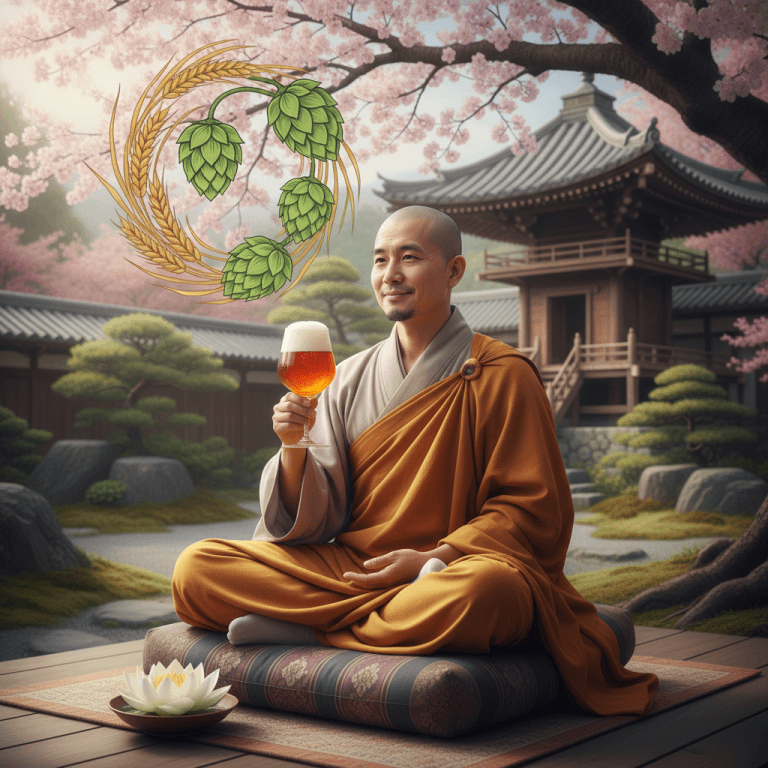

Buddhism and Craft Beer: Finding Balance Between Mindfulness and Moderation
Estimated reading time: 12 minutes
Key Takeaways
- Buddhism emphasizes mindfulness, intention, and moderation in all aspects, including alcohol consumption.
- The Buddhist fifth precept discourages intoxicants to maintain mental clarity and ethical conduct.
- Mindful drinking practices can align craft beer enjoyment with spiritual awareness.
- Cultural variations such as Tibetan rituals illustrate nuanced perspectives on beer and alcohol in Buddhist contexts.
- Conscious and mindful drinking invites self-reflection and honest assessment rather than rigid prohibition.
Table of Contents
- Understanding Buddhism and Its Core Principles
- Alcohol in Buddhism: A Historical Perspective
- Craft Beer: Cultural and Artisanal Dimensions
- Can Buddhists Drink Beer?
- Mindfulness and Drinking Alcohol
- The Buddhist Perspective on Beer
- Zen and Beer Drinking
- Conscious Drinking in Buddhism
- Meditation and Alcohol Consumption
- Conclusion
- Call to Action
Understanding Buddhism and Its Core Principles
Buddhism centers on mindfulness, conscious living, and moderation in all aspects of life. These foundational concepts guide practitioners toward greater awareness and reduced suffering.
The Five Precepts form the ethical backbone of Buddhist practice. One of these precepts specifically addresses intoxicants, advising practitioners to abstain from substances that cloud the mind and diminish awareness. This precept aims to protect mental clarity and ethical behavior.
However, Buddhism places tremendous importance on intention and awareness in all actions. The impact of any behavior—including drinking—depends largely on how it affects your mind and spiritual development. A single beer consumed mindfully in a social setting carries different weight than drinking to escape difficult emotions or achieve intoxication.
This emphasis on intention means that Buddhist teachings don’t function as rigid rules but as guidelines for cultivating awareness. The question becomes not just “what am I doing?” but “why am I doing this, and how does it affect my practice?”
For further exploration of mindful drinking practices in a broader context, check out Mindful Drinking vs Mindless Consumption: How to Create a Balanced Approach to Beer.
Alcohol in Buddhism: A Historical Perspective
The Buddha’s teachings generally advocate abstinence from intoxicants for both laypeople and monks. This guidance supports mental clarity and helps practitioners maintain the awareness needed for spiritual progress. The precept against intoxicants aims to prevent heedlessness—a state where we lose our mindful connection to the present moment.
Historical texts show that early Buddhist communities took this precept seriously. Monks who violated the precept faced consequences within their monastic communities. The concern wasn’t moralistic but practical: intoxication creates conditions for breaking other precepts and damages meditation practice.
Yet Buddhist history also reveals some flexibility in exceptional circumstances. Buddhist casuistry—the application of principles to specific cases—acknowledges scenarios like medicinal use of alcohol or unknowingly consuming fermented substances. These exceptions demonstrate that Buddhist ethics consider context and intention, not just the action itself.
Different Buddhist traditions interpret alcohol use in varied ways. Tibetan Buddhism offers particularly interesting examples. Some Tantric practices incorporate beer rituals as symbolic or transgressive acts. These ceremonies explore themes of purity, enlightenment, and the transformation of ordinary experience into spiritual insight.
In certain Tibetan festivals and rituals, beer serves as an offering and a shared blessing among practitioners. This doesn’t mean unlimited consumption—rather, it represents a conscious choice to engage with substances while maintaining spiritual awareness.
For insights into how ancient traditions viewed brewing, explore Ancient Brewing Meditation: Unveiling Beer’s Mindful History.
Craft Beer: Cultural and Artisanal Dimensions
Craft beer represents something quite different from mass-produced alcohol. Small-batch production, artisanal methods, and a deep focus on quality and flavor define the craft beer movement.
Craft brewers approach their work with tremendous care and attention. They select ingredients thoughtfully, adjust recipes meticulously, and create beverages with distinct character and complexity. This careful, deliberate approach mirrors the mindfulness that Buddhism encourages in all activities.
Appreciating craft beer can become an exercise in present-moment awareness. Noticing the color, aroma, flavor notes, and mouthfeel requires the same attention that Buddhists bring to tea ceremonies or mindful eating. You slow down, engage your senses fully, and experience what’s before you without rushing toward the next moment.
The craft beer culture emphasizes savoring over consumption. Rather than drinking to get drunk, enthusiasts taste small amounts, discuss characteristics, and appreciate the brewer’s skill. This approach aligns remarkably well with Buddhist principles of moderation and conscious engagement.
When you drink a craft beer mindfully, you’re not seeking escape or intoxication. You’re present with the experience—acknowledging the work that created it, the company you’re sharing it with, and your own response to it. This transforms drinking from a mindless habit into a potentially conscious practice.
For more on the mindful appreciation of beer, consider reading Mindful Beer Appreciation: Transforming Your Beer Drinking Experience Through Conscious and Intentional Practices.
Can Buddhists Drink Beer?
The question of whether Buddhists can drink beer doesn’t have a single answer. Mainstream Buddhist views warn against alcohol consumption, citing the fifth precept and the dangers to mental clarity. Many teachers recommend complete abstinence, especially for serious practitioners.
Yet everyday Buddhist practice shows tremendous diversity. Some practitioners integrate beer into social gatherings while maintaining mindful intention and moderation. They view occasional, conscious alcohol consumption as compatible with their spiritual path when approached with awareness.
The key factors include:
- Quantity: Keeping consumption minimal to avoid intoxication
- Frequency: Drinking occasionally rather than habitually
- Intention: Understanding why you’re choosing to drink
- Impact: Honestly assessing how alcohol affects your practice and behavior
- Context: Considering social and cultural factors
Tibetan Buddhist traditions provide historical precedents for beer consumption. Beer was brewed in monasteries, offered during festivals, and consumed as part of religious ceremonies. The beer called “chang” played important roles in both daily life and spiritual practice in Tibetan culture.
These examples don’t justify careless drinking. Instead, they demonstrate that Buddhist communities have found ways to include alcohol while maintaining spiritual focus. The difference lies in how drinking is approached—with awareness, limits, and connection to larger spiritual values.
For additional insights, read Mindful Brewing: A Journey of Craft, Consciousness, and Connection.
Mindfulness and Drinking Alcohol
Mindful drinking means bringing full awareness to your body, mind, and motivations while consuming alcohol. This practice transforms drinking from an automatic behavior into a conscious choice.
Key elements of mindful drinking include:
- Pacing yourself: Drinking slowly and savoring each sip
- Recognizing effects: Noticing how alcohol changes your mental state
- Checking intentions: Understanding why you want to drink
- Setting limits: Deciding in advance how much you’ll consume
- Staying present: Maintaining awareness throughout the experience
When practicing mindfulness and drinking alcohol, you pay attention to the first signs of intoxication. You notice when your thinking becomes less clear, when your emotions shift, or when you start losing present-moment awareness. This information helps you make better decisions about continuing or stopping.
Buddhists who choose to drink can use these moments as opportunities for self-study. Observing your relationship with alcohol reveals patterns of craving, attachment, and aversion. Do you reach for a drink when stressed? Do you drink to fit in socially? Do you struggle to stop at one beer?
These observations aren’t meant to create guilt or shame. Rather, they offer valuable insights into your mind and habits. Cultivating non-attachment means you can enjoy a well-crafted beer without needing it, clinging to it, or building your social identity around it.
Mindful drinking also involves honest self-assessment. Some people discover that any alcohol consumption interferes with their meditation practice or triggers harmful patterns. For these individuals, mindfulness might lead to choosing abstinence rather than moderation.
To dive deeper into the relationship between mindfulness and beer, check out Mindful Homebrewing Practices: A Comprehensive Guide to Brewing Beer with Intention and Awareness.
The Buddhist Perspective on Beer
The Buddhist perspective on beer navigates the tension between enjoyment and attachment. Buddhist teachings don’t reject pleasure itself—they warn against clinging to pleasure or letting it control our behavior.
Beer can be enjoyed without creating suffering when certain conditions are met:
- Consumption doesn’t lead to heedlessness or broken precepts
- Drinking supports community and connection rather than isolation
- The experience enhances well-being rather than creating problems
- No craving or dependency develops
- Spiritual practice remains strong and clear
The key question is whether beer consumption fosters craving or harm. If you find yourself thinking obsessively about your next drink, prioritizing alcohol over practice, or experiencing negative consequences, these are signs that drinking conflicts with your spiritual path.
Mindful drinking can coexist with spiritual well-being when approached with wisdom and restraint. Some practitioners share a single craft beer with friends after a meditation retreat, using it as part of mindful socializing. They appreciate the flavor and the company without seeking intoxication.
Others participate in ritual contexts where alcohol serves symbolic purposes. In these settings, small amounts of beer or wine represent offerings, blessings, or the transformation of ordinary substances into vehicles for spiritual insight.
The balance between enjoyment and attachment requires ongoing attention. Buddhism teaches that attachment causes suffering, but this doesn’t mean rejecting all pleasant experiences. Rather, it means engaging with pleasure without grasping, without needing it to be different than it is, and without making it central to your happiness.
For those interested in beer-related rituals, explore Contemplative Brewing Rituals: Mindful Homebrewing for Deeper Connection and Meaningful Practices.
Zen and Beer Drinking
Zen Buddhism emphasizes harmony, balance, and finding the sacred in everyday activities. Zen teachings often stress strict discipline, including abstinence from intoxicants for serious practitioners.
However, Zen also recognizes the reality of living in the world. Some Zen practitioners acknowledge that life in samsara—the cycle of birth, death, and rebirth—includes social situations where alcohol is present. The question becomes how to engage with these situations skillfully.
Zen and beer drinking intersect through principles of moderation and detached enjoyment. A Zen approach might involve:
- Drinking without attachment to the experience
- Remaining fully present rather than seeking escape
- Recognizing impermanence in each sip
- Avoiding excess while not making rigid rules
- Finding the “middle way” between indulgence and denial
Zen monastery life sometimes includes communal sharing of food and drink after intensive practice periods. These gatherings emphasize connection and relaxation while maintaining the underlying awareness cultivated during meditation.
The Zen perspective values naturalness and spontaneity within the bounds of wisdom. This doesn’t mean doing whatever you want—it means responding to each situation with clarity and appropriate action. Sometimes that means sharing a beer with friends; other times it means choosing not to drink.
Non-attachment remains central. Can you enjoy a beer without needing another? Can you appreciate the taste without creating stories about what drinking says about you? Can you be equally content whether drinking or abstaining? These questions reveal the quality of your practice.
To understand more about the mindful approaches toward brewing, read The Ultimate Guide to Brewing and Identifying Gluten-Free Beer.
Conscious Drinking in Buddhism
Conscious drinking takes mindful drinking a step further by emphasizing awareness of how alcohol affects both body and mind over time. This practice requires honest self-listening and clear boundaries.
Conscious drinking involves:
- Body awareness: Noticing how alcohol affects your energy, sleep, digestion, and physical health
- Mental clarity: Observing changes in thought patterns, emotions, and decision-making
- Practice impact: Assessing how drinking influences your meditation and spiritual development
- Pattern recognition: Identifying when, why, and how much you drink
- Boundary setting: Creating clear guidelines based on your observations
Buddhist practitioners who drink consciously pay attention to timing. Many discover that alcohol consumption before meditation significantly impacts practice quality. Even small amounts can dull awareness, reduce concentration, and interfere with the mental clarity needed for effective meditation.
Listening to your body provides essential information. Some people feel tired, foggy, or emotionally unsettled after drinking. Others notice disrupted sleep patterns or increased anxiety. These signals help you determine what level of alcohol consumption—if any—supports your overall well-being.
Conscious drinking Buddhism also considers the ethical dimensions of alcohol production and consumption. Where does your beer come from? Are workers treated fairly? Does your drinking support local artisans or exploitative industries? These questions extend mindfulness beyond personal experience to include social and environmental impact.
The practice of conscious drinking helps you develop greater self-knowledge. You learn what triggers the desire to drink, what limits serve you well, and how alcohol fits—or doesn’t fit—into your spiritual path. This knowledge empowers better choices aligned with your deepest values.
For a deeper understanding of the meditative aspects of beer tasting, check out Beer Meditation: A Mindful Guide to Enhancing Your Beer Tasting Experience.
Meditation and Alcohol Consumption
The relationship between meditation and alcohol consumption presents clear challenges for Buddhist practitioners. Alcohol directly affects the mind in ways that conflict with meditation’s goals.
Meditation cultivates mental clarity, concentration, and awareness. These qualities allow practitioners to observe their thoughts and emotions with precision and develop insight into the nature of mind and reality.
Alcohol dulls the mind and reduces clarity—even in small amounts. Effects include:
- Decreased concentration: Difficulty maintaining focus on meditation objects
- Reduced awareness: Diminished ability to notice subtle mental states
- Emotional cloudiness: Less precision in observing feelings and reactions
- Impaired insight: Reduced capacity for the clear seeing that leads to wisdom
- Physical restlessness: Increased difficulty sitting still
Most Buddhist teachers recommend avoiding alcohol before meditation sessions. The precept against intoxicants exists partly to protect the conditions necessary for effective practice. When your mind is clouded by alcohol, you can’t engage fully with meditation techniques.
Some practitioners wonder about drinking after meditation. While this creates fewer immediate obstacles to practice, it still raises questions about intention and habits. Are you using alcohol to come down from the heightened awareness of meditation? Does drinking become a reward that creates subtle craving?
Certain Buddhist sects make exceptions for ritual or medicinal purposes, but these are specific contexts with clear boundaries. Regular recreational consumption falls outside these exceptions.
For serious practitioners, the recommendation generally favors abstinence. The more committed you are to developing clarity and insight, the more important it becomes to avoid substances that interfere with these goals.
Even moderate drinkers often notice improved meditation quality when they abstain completely. The mind becomes sharper, concentration deepens, and subtle mental states become more apparent.
To further delve into these topics, read The Ultimate Guide to IPA Food Pairing.
Conclusion
The intersection of Buddhism and craft beer reveals no single right answer but rather a spectrum of approaches. Strict abstinence honors traditional teachings and protects mental clarity. Mindful moderation acknowledges social realities while maintaining spiritual awareness. Ritual and symbolic use explores how ordinary substances can serve spiritual purposes.
Each approach has validity depending on individual circumstances, tradition, and spiritual goals. The common thread connecting these diverse perspectives is the emphasis on mindfulness, intention, and self-awareness.
Buddhist practitioners navigating choices about alcohol consumption benefit from honest reflection. Questions to consider include:
- How does drinking affect my meditation practice?
- Am I drinking from genuine enjoyment or from habit, stress, or social pressure?
- Can I maintain clear awareness while drinking?
- Does my consumption create problems in my life or relationships?
- Am I attached to drinking or free to choose whether to drink?
The craft beer culture’s emphasis on appreciation, quality, and savoring aligns remarkably well with Buddhist values when approached mindfully. Enjoying a carefully crafted brew with friends can become an exercise in present-moment awareness rather than a path to intoxication.
However, this requires genuine honesty about your relationship with alcohol. Buddhism teaches that self-deception creates suffering. If you’re using “mindful drinking” as an excuse for habits that actually harm your practice, you’re moving away from rather than toward awakening.
Your relationship with alcohol—whether that means abstinence, occasional mindful consumption, or something in between—should support rather than undermine your spiritual development. The Buddha taught the middle way between extreme asceticism and indulgence. For some practitioners, this middle path includes occasional beer. For others, it means complete abstinence.
The invitation is to bring the same careful attention to decisions about alcohol that you bring to other aspects of your practice. Let wisdom, compassion, and awareness guide your choices rather than habit, peer pressure, or attachment.
To explore more about the intersection of wellness and brewing, check out Mindful Brewing: Crafting Sustainable and Wellness-Focused Beers for 2024.
Call to Action
Your experiences and thoughts on alcohol within spiritual practice matter. How do you navigate the intersection of social life and spiritual values? What have you discovered about mindful or conscious drinking Buddhism in your own practice?
Share your reflections in the comments below. Your insights might help fellow practitioners find their own balance between Buddhist principles and everyday choices.
For those interested in exploring this topic further, seek resources on mindfulness, drinking, and Buddhism. Books, articles, and teachers addressing conscious approaches to alcohol can support thoughtful decision-making aligned with Buddhist values and your personal well-being.
Consider experimenting with periods of abstinence to observe how your meditation practice and mental clarity shift. Notice what you discover about yourself, your habits, and your relationship with pleasure and attachment.
Whatever path you choose regarding alcohol, let it be a conscious choice rooted in self-knowledge, wisdom, and genuine care for your spiritual development.


