Women as Ancient Brewers: A Journey Through Brewing Heritage
Estimated reading time: 15 minutes
Key Takeaways
- Women were the original brewers, shaping beer culture for thousands of years before industrialization shifted the balance.
- Women brewers history shows deep connections between brewing, domestic life, and spirituality across many ancient societies.
- Alewives were vital economic actors in medieval Europe, running businesses from their homes despite later marginalization.
- Brewing goddesses like Ninkasi and Hathor highlight the sacred role brewing held in female cultural heritage.
- The erasure of forgotten women brewers is a historical blind spot; their influence persists in craft brewing today.
Table of Contents
Overview of Women’s Role in Brewing
Brewing began as a domestic task, performed by women as part of their essential household work. In most ancient and medieval societies, women brewed beer not as a hobby or specialty craft, but as a practical necessity—providing safe, nutritious drink for their families when clean water was often scarce.
Women brewing beer was considered as natural as baking bread or preparing meals. In fact, brewing and baking were often the same job, since both required grinding grain, managing fermentation, and understanding heat and timing. Beer provided calories, vitamins, and hydration, making it more food than luxury.
As households produced more ale than the family could consume, many women began selling their surplus. These women in brewing history became known as alewives or brewsters—entrepreneurs who scaled domestic production into small commercial ventures, selling ale from their homes or operating local alehouses.
The Museum of Oxford notes that in medieval English towns, female-led brewing households were remarkably common, with women dominating small-scale ale production for centuries. Learn more here.
Before industrialization transformed brewing into factory work requiring heavy equipment and capital investment, women were not the exception but the rule in brewing practices. Archaeological evidence, legal records, and cultural artifacts all point to the same conclusion: if you wanted beer in ancient or medieval times, you went to a woman. Wikipedia | Women’s History Org
Historical Context of Female Brewers
Understanding women brewers history requires looking across continents and centuries. Women’s dominance in brewing wasn’t limited to one culture or time period—it was a nearly universal pattern that persisted for millennia.
Ancient Mesopotamia and Sumer (c. 4000–1800 BCE)
The earliest written evidence of brewing comes from Mesopotamia and Sumer, where women brewed barley beer and recorded their methods on cuneiform tablets. Beer production in these societies was closely associated with female deities and priestesses, suggesting that brewing held both practical and sacred significance.
Women brewers appear throughout Sumerian records, not as occasional practitioners but as the primary producers of beer for households, temples, and early commercial purposes. The famous Hymn to Ninkasi—a Sumerian beer goddess—functions both as religious poetry and a preserved brewing recipe, passed down through female tradition. Beer & Brewing | Wikipedia | Women’s History
Babylon and Ancient Egypt
In Babylon, female brewers ancient worked as tavern keepers and commercial brewers, sometimes engaging in early forms of bookkeeping and trade. The Code of Hammurabi even includes regulations specifically for female tavern keepers, showing their prominence in the beer economy.
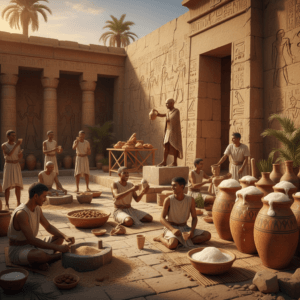
Egyptian society viewed brewing as particularly women’s work. Women handled grain preparation, mashing, and straining—the core technical work of brewing. Tomb art from various dynasties depicts women brewing and drinking beer, evidence that this wasn’t hidden labor but celebrated craft.
Egyptian brewing goddess figures like Hathor and Tenenit further reinforced the feminine nature of fermentation and brewing in this culture. Beer & Brewing | Wikipedia
Early Germanic and Nordic Societies
Among Germanic and Nordic peoples, women served as the primary brewers of ale and mead until monastic institutions and commercial production expanded. Brewing remained tied to women’s household management and hospitality roles, with recipes and techniques passed from mother to daughter.
Medieval and Early Modern Europe
The medieval period saw women in brewing history transition from household producers to market sellers. Women operated as alewives throughout Europe, particularly in England, where brewing provided crucial income for widows and unmarried women.
However, this period also marked a turning point. As brewing became more profitable, guilds began forming to control production and exclude competition. These guilds systematically pushed women out, claiming that commercial brewing required skills or strength that women supposedly lacked.
The expansion of monastery breweries, which employed male monks and lay brothers, further marginalized female brewers. Gradually, laws and regulations made it harder for women to brew legally or sell their products. Wikipedia | Museum of Oxford | The Swaen
This transformation from women’s domestic labor to male-dominated profession didn’t happen because women stopped brewing well or lost interest. It happened because economic power shifted, and those who controlled guilds, capital, and legal systems actively excluded women from the trade they had invented.
Ancient Women Brewers Across Cultures
Female brewers ancient societies left remarkable evidence of their expertise, despite the challenges of preserving women’s stories across millennia.
Mesopotamian and Sumerian Brewers
Mesopotamian women appear in cuneiform records as skilled brewers who understood the complex chemistry of fermentation long before modern science could explain it. They managed the delicate balance of temperature, timing, and ingredients needed to transform barley into nourishing beer.
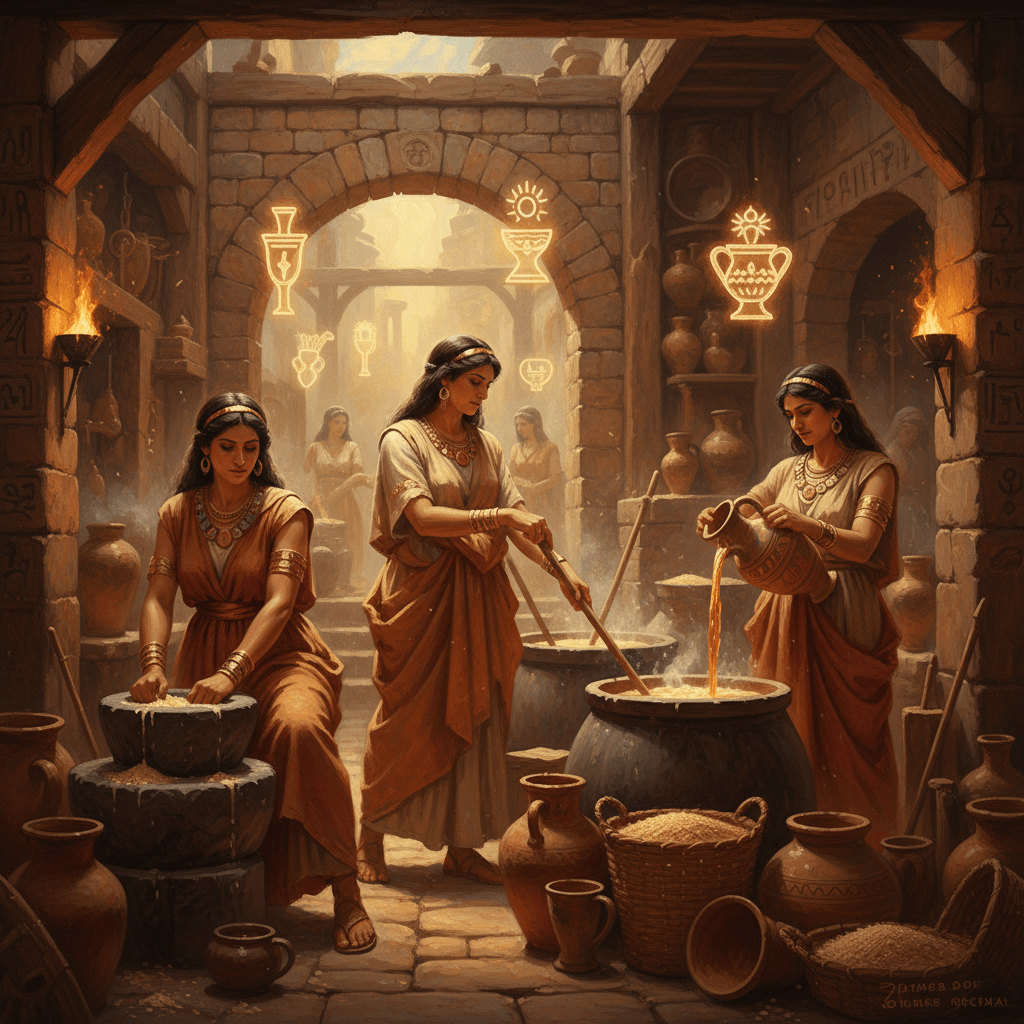
The Hymn to Ninkasi stands as one of brewing’s oldest documents—a poetic prayer to the Sumerian beer goddess that doubles as a recipe. Written around 1800 BCE, it preserves brewing techniques including mixing bappir (a twice-baked barley bread) with dates and honey, describing the filtering process, and noting fermentation vessels.
This wasn’t casual home cooking. These women were master brewers producing beer for temples, for trade, and for the daily sustenance of their communities. Hop Culture | Beer & Brewing | Wikipedia | Women’s History | Belleville Brewing
Babylonian Tavern Keepers
Babylonian women operated as tavern keepers and commercial brewers, managing establishments that served as social centers and trading posts. These weren’t just servers—they were business owners who brewed their own product, maintained their premises, and engaged in commercial transactions.
Some Babylonian female brewers kept detailed records of ingredients, sales, and inventory, contributing to early accounting practices. Their prominence in the beer trade was significant enough that King Hammurabi’s law code included specific regulations governing their businesses. Beer & Brewing | Wikipedia
Egyptian Women Brewers
In ancient Egypt, brewing was so closely associated with women that the hieroglyphic symbols and artistic depictions almost always showed female brewers. Women handled every stage: grinding grain, preparing the mash, managing fermentation, and straining the finished product.
Tomb paintings from various dynasties show women brewing beer for both daily consumption and religious offerings. Archaeological evidence suggests that Egyptian women brewed multiple styles of beer, varying ingredients, strength, and flavor for different purposes and social occasions.
The technical knowledge required was considerable. Egyptian brewers controlled fermentation temperatures in a desert climate, prevented spoilage, and created consistent products without modern equipment or understanding of microbiology. Beer & Brewing | Wikipedia
Global Brewing Traditions
Ancient women brewers weren’t limited to the Middle East and Mediterranean. In the Andes, women of the Wari empire (600–1000 CE) brewed chicha, a corn-based beer central to their culture. Archaeological evidence shows large-scale chicha production facilities staffed by women, producing hundreds of liters for feasts and ritual gatherings.
Across Africa, Asia, and the Americas, wherever fermented grain or plant beverages emerged, women’s hands typically guided the process. This global pattern suggests something fundamental about how early human societies organized food production and specialized labor. Hop Culture | Wikipedia
Alewives and Their Legacy
The term alewives refers to women who brewed and sold ale, particularly in medieval England. These brewsters (the female form of “brewer”) operated at the intersection of household economy and commercial enterprise, turning essential domestic work into income.
The Economics of Alewives
An alewife typically brewed in her own home using her household’s grain supply. When she produced more than her family needed, she sold the surplus to neighbors, at markets, or from an attached alehouse. This allowed women—particularly widows and unmarried women—to earn independent income without requiring significant capital investment.
In 1311, approximately 20 percent of brewing households in Oxford were led by women. Throughout medieval English towns, women dominated small-scale ale production, with some communities having dozens of active female brewers at any given time.
These weren’t marginal participants. Alewives history shows they were central economic actors, feeding their communities and supporting their families through skilled craft work. Wikipedia | Museum of Oxford
From Respect to Ridicule
Early medieval society generally respected alewives as providers of essential everyday drink. Beer was safer than water, more nutritious than many alternatives, and necessary for everything from meals to wages (beer was sometimes used as payment for labor).
However, as brewing became more profitable, cultural attitudes shifted. Alewives increasingly appeared in literature and art as figures of mockery—depicted as dishonest, sexually immoral, or incompetent. These stereotypes served a purpose: they justified excluding women from an increasingly lucrative trade.
The image of the alewife gradually merged with witch imagery. The pointed hat alewives wore to be visible in crowded markets became a “witch’s hat.” The cauldron used for brewing became a symbol of dark magic. The cat kept to protect grain from mice became a witch’s familiar.
This wasn’t coincidence. As guilds and commercial interests pushed women out of brewing, demonizing female brewers made their exclusion seem natural or even necessary. Wikipedia | The Swaen
The Decline of the Alewife
Several forces combined to marginalize alewives:
- Monastery breweries expanded production, creating competition with deeper resources and institutional backing.
- Male-dominated guilds formed to control brewing, setting rules that favored large-scale production and explicitly excluding women from membership.
- Legal regulations increasingly required licenses, fees, or property ownership that effectively barred women from commercial brewing.
- Technological changes introduced equipment and facilities that required capital investment beyond most women’s means.
By the early modern period, brewing had largely transitioned from women’s household craft to men’s commercial profession. The transformation was complete enough that by the Industrial Revolution, the idea of women as natural brewers had been almost entirely forgotten. Wikipedia | The Swaen
Brewing Goddess History
The connection between women and brewing ran so deep in ancient cultures that multiple societies developed female deities specifically associated with beer and fermentation. Brewing goddess history reveals how sacred and essential this craft was considered.
Ninkasi: The Sumerian Beer Goddess
Ninkasi stands as perhaps the most famous brewing deity. Her name translates roughly to “the lady who fills the mouth,” and she was venerated specifically for her role in creating beer.
The Hymn to Ninkasi, written around 1800 BCE, celebrates her as the daughter of Enki (god of water and wisdom) and Ninhursag (earth goddess). The hymn describes the brewing process as Ninkasi’s sacred work, transforming simple ingredients into something that brings joy and sustenance.
What makes the hymn remarkable is its dual nature: it’s simultaneously a religious text and a technical manual. Modern brewers have used its instructions to recreate ancient Sumerian beer, proving the accuracy of the brewing knowledge preserved in poetic form. Wikipedia | Women’s History | Belleville Brewing
Egyptian Beer Goddesses
Egypt honored multiple female deities associated with brewing and beer:
- Hathor, goddess of joy, music, and fertility, was credited with inventing brewing. She was associated with intoxication and celebration, and her festivals involved ceremonial beer drinking. Temple priestesses brewed sacred beer as part of Hathor’s worship.
- Tenenit was venerated specifically as a beer goddess. Her role focused on the technical aspects of brewing and the safety of fermented beverages. Brewers would invoke her blessing for successful fermentation and quality beer.
The connection between Hathor, fertility, and brewing wasn’t accidental. Ancient cultures recognized parallels between the mystery of fermentation—transformation and creation from seemingly inert ingredients—and the mystery of pregnancy and birth. Hop Culture | Beer & Brewing | Wikipedia | Belleville Brewing
Fermentation, Fertility, and Femininity
Across cultures, societies linked fermentation, fertility, and femininity in their mythology and practice. The bubbling, transformative process of brewing paralleled the creative, life-giving capacities associated with women.
This wasn’t primitive superstition. These cultures recognized that successful brewing required deep knowledge of natural processes, careful attention to signs of change, and patient management of transformation over time—skills that overlapped with midwifery, medicine, and food preservation, all typically women’s domains.
The presence of brewing goddesses across multiple unconnected cultures suggests that associating women with brewing was nearly universal in early human societies. Wikipedia | The Swaen
Female Brewing Heritage and Its Impact
Female brewing heritage connects thousands of years of women’s work to contemporary craft beer culture. Understanding this history fundamentally changes how we think about who “belongs” in brewing.
The Recent Shift to Male Dominance
The modern perception of brewing as inherently masculine work is surprisingly recent. For most of human history—from the earliest agricultural settlements through medieval times—brewing was women’s work, plain and simple.
The shift happened primarily during industrialization in the 18th and 19th centuries. As brewing moved from homes and small alehouses to large commercial breweries, it required significant capital investment in equipment, facilities, and distribution. Legal and financial systems that excluded women from property ownership, business licenses, and credit effectively barred them from commercial brewing.
Additionally, the development of “scientific” brewing in the 1800s created new professional roles—brewmasters, chemists, engineers—that women were excluded from through lack of educational access. Universities didn’t train female brewers or scientists, so the new industrial brewing industry developed as an exclusively male profession.
This transformation took only a few generations, but it was so complete that by the mid-20th century, most people had forgotten that brewing had ever been women’s domain. Wikipedia | The Swaen
Reclaiming the Heritage
Today’s women brewers and beer historians are actively reclaiming this heritage. They’re using archaeological evidence, historical records, and cultural artifacts to tell the fuller story of women beer history.
Initiatives like the Women in Beer History panel discussions, museum exhibitions on alewives, and brewing festivals that highlight female brewers all draw on this deep historical legacy. They argue that women aren’t “entering” brewing—they’re returning to a craft they pioneered.
This reclamation work matters because it challenges the assumption that women in breweries today are novelties or tokens. Understanding that brewing was women’s work for millennia reframes contemporary women brewers as inheritors of tradition, not interlopers in a male space. Hop Culture | Women’s History | The Swaen
Contemporary Influences
Awareness of female brewing heritage is influencing modern brewing in several ways:
- Branding and storytelling: Many breweries now reference historical female brewers, brewing goddesses, or alewife traditions in their names, logos, and marketing materials.
- Recipe revival: Some brewers are recreating ancient and medieval beer styles based on recipes preserved by women brewers, like Sumerian beer from the Hymn to Ninkasi or medieval gruit ales that predated hop usage.
- Gender equity conversations: Understanding brewing’s female origins strengthens arguments for gender diversity in modern brewing. It’s harder to claim brewing is “naturally” male work when history proves otherwise.
- Educational programs: Beer history courses, brewery tours, and craft beer education increasingly include the story of women brewers, ensuring new generations understand the full heritage of their pint.
Forgotten Women Brewers
For every Ninkasi or documented alewife, countless forgotten women brewers left no record. Their absence from history books doesn’t mean they didn’t exist—it reflects how historical documentation has systematically undervalued women’s work.
Why Women’s Brewing Stories Disappeared
Several factors contributed to the poor documentation of women brewers:
- Domestic work invisibility: Because brewing was considered ordinary household work when women did it, it often went unrecorded. Historical documents noted unusual or commercial activities, not daily domestic tasks.
- Legal and property systems: Medieval and early modern legal systems typically recorded men’s names as household heads, property owners, and business licensees. Even when a woman brewed and sold the ale, records might list her husband’s or father’s name.
- Guild records: As guilds took over brewing regulation, their records focused on male members. Women who brewed informally or in small quantities often escaped official notice.
- Literary and artistic bias: When writers and artists depicted brewing, they increasingly focused on male brewers as commercial brewing professionalized, erasing earlier female-dominated traditions from cultural memory.
- Value judgments: Historians long dismissed brewing as trivial “women’s work” not worthy of serious documentation or study, meaning many sources that did mention female brewers were ignored or lost.
Wikipedia | Women’s History | The Swaen
Recovering Lost Histories
Despite these obstacles, historians, archaeologists, and museum curators are working to recover forgotten women brewers and make their contributions visible.
Projects examining medieval tax records, court documents, and property inventories have revealed the extent of women’s brewing activities in specific towns and regions. The Museum of Oxford’s research on alewives in Oxford provides a model for this work, showing how careful archival research can reconstruct women’s economic activities.
Archaeological investigations of brewing sites, particularly in ancient Egypt and Mesopotamia, have uncovered physical evidence of women’s brewing work—brewing vessels, grain storage, and even residues that can be chemically analyzed.
Museum exhibitions specifically focused on women and beer, like those documented by the National Women’s History Museum, bring these stories to public attention and challenge visitors to reconsider their assumptions about brewing history. Women’s History | Museum of Oxford | The Swaen
Erasure, Not Absence
It’s crucial to understand that gaps in the historical record represent erasure, not absence. Women didn’t stop brewing when documentation stopped mentioning them—they kept working while record-keepers stopped noticing.
This distinction matters because it shifts responsibility. The problem isn’t that women weren’t important in brewing history; the problem is that those who controlled historical documentation didn’t consider women’s work worth recording.
Recognizing this erasure reminds us to question whose stories get preserved and whose get forgotten in every field, not just brewing. It also encourages us to look harder for women’s contributions in unexpected places—court records, tax documents, archaeological remains, folklore, and family traditions where official histories stayed silent. Wikipedia | The Swaen
Conclusion
The evidence is overwhelming: women as ancient brewers weren’t exceptions or curiosities—they were the foundation of brewing across continents and centuries. From the Sumerian priestesses who honored Ninkasi to the Egyptian women depicted in tomb paintings, from Babylonian tavern keepers to medieval English alewives, women created, refined, and passed down the knowledge that made beer central to human culture.
Understanding women brewers history and women beer history transforms how we see both the past and the present. It reveals that the modern image of the male brewmaster is a recent invention, not an ancient tradition. For thousands of years, if you wanted beer, you sought out a woman who knew the secrets of fermentation, the timing of the mash, and the art of creating flavor from simple grains.
The female brewing heritage we’ve explored shows that brewing was intimately connected to women’s roles as household managers, community providers, and even spiritual practitioners. It wasn’t accidental or temporary—it was fundamental to how early societies organized food production and social life.
Yet this heritage was nearly erased as commercial interests, guild restrictions, and changing legal systems pushed women out of the trade they had pioneered. The forgotten women brewers who left no names in official records still left their legacy in every beer brewed today, carrying forward techniques and traditions refined by generations of female hands.
Reclaiming this history isn’t just about honoring the past. It’s about creating a more inclusive future for brewing—one that recognizes women not as newcomers to the craft but as returning to their rightful place in a tradition they created. Beer & Brewing | Wikipedia | Women’s History | The Swaen
Join the Conversation
Now that you know the rich history of women in brewing, we invite you to become part of recovering and celebrating this heritage:
- Share your stories: Do you know family traditions, local histories, or regional customs involving women and brewing? These personal stories help fill the gaps in official records and keep alewives history alive for future generations.
- Visit and support: Seek out museums, historical talks, and brewery tours that highlight women’s brewing heritage. The Museum of Oxford’s alewife exhibition and similar projects across the country deserve your time and support.
- Explore further: Dive deeper into related topics:
- The brewing goddesses of different cultures and their continuing influence
- Medieval alewives and how they navigated business and social restrictions
- Modern women in craft beer who are honoring and extending ancient traditions
- The connection between witch stereotypes and the deliberate marginalization of female brewers
- Support women-owned breweries: Many contemporary women brewers explicitly reference female brewing heritage in their work, creating beers inspired by ancient recipes or naming their establishments after historical female brewers. Your patronage helps ensure that women’s voices continue to shape brewing’s future.
- Challenge assumptions: When you hear someone claim that brewing is traditionally men’s work, share what you’ve learned. The story of women as ancient brewers deserves to be common knowledge, not a hidden historical footnote.
The work of recovering forgotten women brewers continues. Every museum exhibition, every archaeological discovery, every historical research project brings more of these stories to light. By engaging with this history, you help ensure that future generations will know the truth: beer was built by women’s hands, women’s knowledge, and women’s innovation across thousands of years of human history.
Hop Culture | Women’s History | The Swaen | Mindful Brewing 2024 | Ancient Brewing Meditation
FAQ
Who were the alewives in medieval Europe?
Alewives were women who brewed and sold ale primarily from their homes. They played a crucial economic role by providing communities with beer, offering widows and unmarried women a source of independent income before being pushed out by guild regulations and industrialization.
Why did brewing shift from women to men in history?
The shift was due to industrialization, the rise of guilds, legal barriers, and the need for capital-intensive equipment. Men gained control of commercial brewing through these structural changes, pushing women out despite their historical centrality in the craft.
What is the Hymn to Ninkasi?
The Hymn to Ninkasi is an ancient Sumerian poem that honors the goddess of beer and simultaneously serves as a brewing recipe. It highlights the sacred nature of brewing and preserves one of the earliest known brewing instructions attributed to women brewers.
Are there modern breweries that honor female brewing heritage?
Yes, many breweries today celebrate women’s brewing history through branding, recipe revivals, and public education. These efforts help restore the recognition of women as the original brewers and foster greater gender equity in the industry.
How can I learn more about women in brewing history?
Explore resources like Women’s History articles, museum exhibitions such as those at the Museum of Oxford, and panel discussions documented by Hop Culture. Supporting women-led brewpubs and attending talks also enriches your understanding.